

In a world that turns a blind eye to geopolitical turmoil, Nouriel Roubini sounds the alarm over Hormuz and the oil weapon that has historically leveled empires. While Wall Street lives under the illusion of the Artificial Intelligence boom, tail risks are piling up threateningly. The global economy is now walking a tightrope, poised to plunge into a nightmarish, stagflationary universe.
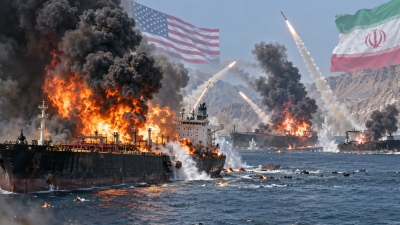
Specifically, according to Roubini, the Persian Gulf remains in a volatile imbalance. There has been no meaningful agreement to reopen the Strait of Hormuz because the United States and Iran remain far apart on their demands, with the Iranians holding greater bargaining power than US President Donald Trump ahead of the upcoming US midterm elections this November. In the absence of a comprehensive agreement, the resumption of hostilities remains highly likely, as reflected in the growing risk of returning to all-out war.
Despite this, stock markets are moving upward on hopes that a ceasefire could lead to a comprehensive deal. Furthermore, the overall economic impact in terms of growth and inflation has been relatively modest. Although this is the largest disruption ever recorded in global oil supplies, the oil shocks of the 1970s had far more severe consequences.
Iran's strategy continues to rely on using oil as a weapon, a practice with a long history. Some historians argue that Germany partially lost World War I because an Allied naval blockade deprived it of oil. Similarly, Imperial Japan made the fatal decision to attack the US fleet at Pearl Harbor because the administration of US President Franklin D. Roosevelt had imposed an oil embargo against it following its invasion of China. Stalin would later argue that the Nazis lost World War II because Soviet forces blocked the Axis powers from capturing the Caucasus oil fields.
After the war, the 1956 Suez Crisis disrupted oil shipments from the Middle East to Europe when France, the United Kingdom, and Israel launched an operation to seize the Suez Canal after its nationalization by Egypt. (They were eventually forced to withdraw under pressure from the US, which was focused on avoiding a conflict that could involve the Soviets.) A decade later, the trigger for the Six-Day War between Israel and various Arab states was Egypt's attempt to block shipments of Iranian oil to Israel through the Straits of Tiran.
Severe consequences
According to Roubini, the geopolitical upheavals of the 1970s led to a lost decade of stagflation (multiple recessions and high inflation), weak stock markets, and double-digit bond yields. The consequences were so severe that the 1970s remained deeply engraved in our collective memory.
"However, like this year's war, subsequent politically motivated oil crises—following Iraq's invasion of Kuwait in 1990, the oil shock of 2000–01, the US invasion of Iraq in 2003, and last year's 12-day war against Iran—had much milder economic and financial impacts. There are several reasons for this," the economist notes, adding:
"First, after the 1970s, OPEC producers realized that using oil as a weapon can be counterproductive. An oil shock large enough to cause global stagflation will eventually lead to a collapse in oil demand and prices, as happened in 1981–82. Thus, key players like Saudi Arabia and the Gulf states increase supply when geopolitical turmoil triggers sharp spikes in oil prices.
Additionally, since the 1970s, gains in energy efficiency have tended to reduce the share of imported oil used in production and consumption. Meanwhile, the power of OPEC has waned as its members have placed their own interests above the need to act in coordination (with the United Arab Emirates being the most recent defector), while new sources of supply have entered the market, most notably in the US following the shale energy revolution."
Following the oil shocks of the 1970s, major oil consumers, including the US, Europe, China, and Japan, also established strategic petroleum reserves that can be released when prices spike (serving as a key source of resilience this year). At the same time, alternatives to oil—natural gas, renewable energy sources, and new, safer modular nuclear reactors (with fusion energy potentially becoming available in the next decade)—have gained momentum and market share.
The future
According to Roubini, looking ahead, an increasingly larger share of energy demand (via electric vehicles and batteries) will be met by electricity that can be generated without the use of oil.
At the same time, the standard macroeconomic policy response (both fiscal and monetary) to oil shocks has improved, helping to prevent an unanchoring of inflation expectations like the one seen in the 1970s. Partly as a result of these factors, oil shocks have become less persistent and shorter in duration compared to those of the 1970s, which lasted about a decade. The oil shock of 1990–91 lasted nine months, the one in 2000–01 was even shorter, while the shock following last year's 12-day war lasted just a few weeks.
Finally, and most importantly, unlike previous periods when macroeconomic and financial trends were dominated by an oil shock turning into a negative aggregate supply shock, the current situation is characterized by a structural positive aggregate supply shock in the form of the investment boom in Artificial Intelligence (AI). Tailwinds from the tech sector are boosting growth and curbing inflation in many countries and regions, which explains why US equities hit new highs even when the price of oil surpassed $100 a barrel this spring. Although a correction has since occurred following the resurgence of hostilities, it has remained limited.
Of course, if the latest conflicts lead to a full-scale escalation of hostilities, the economic consequences and market impacts could be more severe, as a prolonged conflict would increase the risk of a truly stagflationary outcome. This is not the baseline scenario; however, recent developments show that tail risks are larger than what financial markets are currently pricing in, the economist concludes.
www.bankingnews.gr







Σχόλια αναγνωστών