

Trump considers ending the war
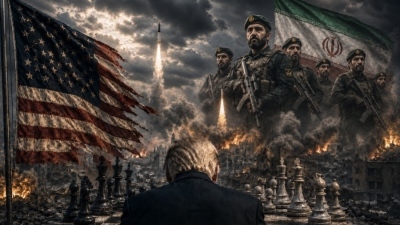
According to the same sources, during discussions with his top advisers, Donald Trump has expressed support for the idea of ending the war with Iran. This development signals a potential shift in direction for the US administration, as Washington appears to be considering ways toward de-escalation, rather than further expanding military operations. Moving along the same lines, a report by Reuters indicates that four top advisers to Donald Trump are attempting to prevent further escalation of the war with Iran prior to the congressional midterm elections scheduled for November.
Fear of electoral fallout for Republicans
As reported by Reuters, citing four sources speaking under condition of anonymity, White House officials want to prevent the conflict with Iran from dominating the campaign agenda. The goal is to limit political losses for the Republican Party and preserve the fragile Republican majority in both the Senate and the House of Representatives. The same sources maintain that, within this context, the US administration may seek a temporary de-escalation before the elections, without ruling out a return to a more aggressive military policy after their conclusion. In other words, the strategy under consideration does not necessarily mean a permanent end to the confrontation, but may constitute a tactical pause with strong political and military undertones.
Economic pressure on Tehran instead of a new military attack
The same sources report that the US government is now focusing on intensifying economic pressure against Tehran in order to gain greater leverage in potential future talks. This option gains increased significance following the failure of military operations over recent months to achieve that specific goal. Washington thus appears to be evaluating a different approach: more economic pressure, sanctions, and diplomatic pressure, instead of a new military escalation that could further raise costs for the US.
Just 31% of Americans support the war
The political dimension of the conflict becomes even more intense due to the stance of the American public. According to a Reuters poll conducted at the end of August, just 31% of Americans stated that they support the war with Iran, while approximately 63% opposed it. The growing discontent is linked, among other factors, to rising gasoline prices in the United States, transforming the war into an increasingly sensitive political issue for the Trump administration. This development creates additional pressure on the White House, as prolonging the conflict could have immediate economic repercussions on the daily lives of Americans and, by extension, influence voting behavior.
"Freeze" also for replenishing US munitions
At the same time, sources maintain that a tactical pause in hostilities would afford the US armed forces the necessary time to replenish stocks of critical precision munitions. This represents another factor influencing Washington's strategy. However, implementing a policy of "wait and see" is not easy in practice, as the situation on the ground remains highly fluid and both sides continue to exchange strikes. Thus, even if the US administration pursues a temporary de-escalation, the dynamics of conflict could significantly limit room for maneuver.
Washington Post: War weakens US readiness
Meanwhile, the Washington Post reported a few days ago that commanders of the US Army, Navy, and Air Force warned US Secretary of War Pete Hegseth that a prolonged war with Iran risks undermining the operational readiness of American forces on other fronts. This warning adds another critical factor to the equation. For Washington, therefore, the issue is not merely the domestic political cost or the financial burden on American consumers. It is also about preserving US military power across multiple theaters without allowing the conflict with Iran to absorb disproportionate resources and munitions. Set against the backdrop of the November midterm elections, growing public discontent, and warnings from military commanders, the Donald Trump administration now faces a complex balance: maintaining pressure on Tehran without allowing the war to turn into a political and military drag for Washington.
www.bankingnews.gr








Σχόλια αναγνωστών