

However, even amidst chaos, the images revealed from the American aircraft carrier USS Abraham Lincoln are shameful... – Damaged, rusted, a hulk of scrap metal, truly shameful images
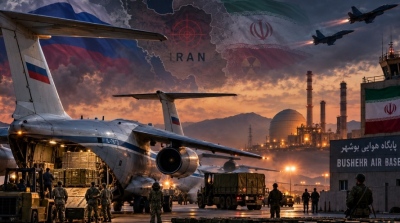
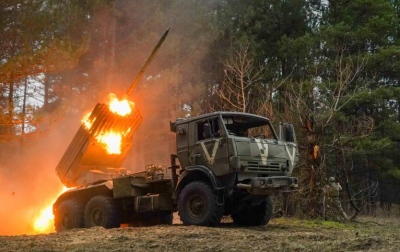
The intensity of the Persian Gulf crisis temporarily receded following initial American strikes and subsequent Iranian retaliation, particularly against the Titin base in Jordan, leading to a brief lull. However, Iran launched a fresh assault using missiles and drones targeted at a critical US military base in Kuwait, causing devastating destruction and heavy casualties. The attack served as retaliation for the incident in Sirik, where a missile struck civilians attending a wedding reception, leaving 6 dead and 68 wounded. Meanwhile, US President Donald Trump stressed that Iran attempted to construct a specialized missile designed to deploy naval mines—a capability previously unseen, yet now unfolding in real-time. Nevertheless, amid the operational chaos, the visual evidence surrounding the USS Abraham Lincoln remains deeply troubling. Damaged, heavily rusted, and resembling a hull of scrap metal, the photographs present a stark and unflattering reality...
Iran strikes critical US base in Kuwait, causing casualties and widespread destruction
Iranian forces executed a targeted strike against a primary facility inside a US base in Kuwait. "A key installation at an American military base in Kuwait was hit, sending massive columns of smoke into the sky," with initial field reports confirming multiple casualties alongside widespread destruction. Official updates clarified that the military operation was carried out using a combination of ballistic missiles and attack drones. The General Staff of the Kuwait Armed Forces announced that national territory faced a coordinated offensive, prompting air defense systems to activate and intercept incoming drones and missiles. As a direct consequence of the bombardment, all operational activities at Kuwait International Airport were immediately suspended. Back in mid-June, the United States and Iran had inked a memorandum intended to establish a framework for peace negotiations. However, three weeks later, a dramatic military escalation erupted after the US government accused Iranian forces of firing upon commercial vessels navigating the Strait of Hormuz, triggering renewed cross-border strikes.
Trump: We are prepared to resume attacks on Iran – They tried to build a mine-launching missile
"The upcoming elections have zero influence on my actions. First of all, I am not on the ballot, but my party is, and I will support my party," stated US President Donald Trump. "I believe my party deeply respects the fact that we will never allow Iranian forces to acquire nuclear weapons." "Frankly, previous administrations should have resolved this years ago, but they lacked the resolve to act," added the US President. "We remain fully prepared to initiate a new military strike against strategic targets in Iran." "We successfully eliminated the newly deployed military hardware they attempted to position along the critical Strait of Hormuz." "Some of those assets were strictly defensive, while others were explicitly offensive capabilities." "They were attempting to identify and track passing maritime traffic because their operational visibility was compromised." "We destroyed far more than just their primary radar installations." "Last night's strike was exceptionally severe, and we stand ready to launch additional tactical strikes at any time of our choosing." According to Trump, Iranian engineers were actively attempting to manufacture a specialized missile system engineered to deploy naval mines. "Who would even conceive such a weapon? I had never heard of such a system, but that is precisely what they were engineering." "We observed them constructing it; we maintain complete surveillance over all their military activities."
Iran's Supreme National Security Council: New strategy will shatter US foundations in the Gulf
The Secretary of Iran's Supreme National Security Council (SNSC) issued a stern warning to the United States, stating that desperate attempts to salvage the ongoing conflict will fail and that Iran's new military strategy will "shatter the foundations of US presence in the Middle East." Widespread panic is reportedly mounting in Washington and Tel Aviv as the aggressive campaign against Iran enters its seventh month without attaining its core strategic objectives. "Through these desperate maneuvers, not only will you fail to escape the depths of hell you created, but you will soon witness how Iran's updated battlefield strategy, proactive diplomacy, and countermeasures against the economic blockade will tear down your presence."
New York Times: US Navy trapped in a logistical nightmare across the region
The prolonged military conflict with Iran has severely disrupted the operational support framework of the US Navy, according to a detailed investigation published by the New York Times. Reports indicate that the deployed American fleet requires over 420,000 meals and 8 million gallons of naval fuel every single week to sustain operations. Concurrently, precision strikes by Iranian forces have rendered several key forward bases and supply routes completely inaccessible. Consequently, major US warships are now forced to undergo risky underway replenishment operations at sea every five to six days.
USA Today: Growing US concern over advanced Iranian ballistic missiles
According to a report by USA Today citing former US military personnel and senior intelligence officials, Tehran has successfully fielded a next-generation class of ballistic missiles capable of bypassing sophisticated US air defense networks. The publication notes that Iranian intelligence and military units have effectively cut off secure access to 15 key US bases situated around the Persian Gulf. "It only takes one, two, or three Kheibar Shekan missiles penetrating the defensive perimeter to create catastrophic, irreversible consequences," the report highlighted.
Only 6 ships transit the strategic Strait of Hormuz
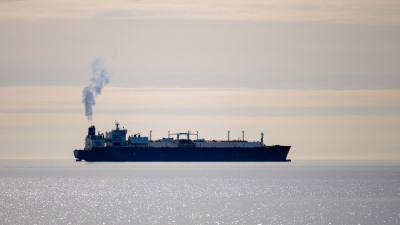
A mere six commercial cargo ships successfully transited the vital Strait of Hormuz on Wednesday, September 2, down from 11 vessels the previous day, according to real-time maritime tracking data from Kpler cited by Reuters. The maritime traffic consisted of two Very Large Gas Carriers, two long-range oil tankers, one Supramax vessel, and one Panamax tanker. This figure represents a dramatic decline compared to the recent 10-day moving average of roughly 13 commercial vessels per day. Analysts note that official numbers regarding maritime traffic through the waterway may undergo revisions, as several ship operators routinely deactivate their automated AIS transponders during transit.
Embarrassing images of rusted and damaged aircraft carrier USS Abraham Lincoln
The supercarrier USS Abraham Lincoln arrived in Thailand following an exhausting 286 consecutive days at sea and months of intensive combat operations in the Middle East, displaying severe exterior damage, heavy rust, and clear signs of battle wear. The current visual state of the capital US aircraft carrier has been described by observers as shocking, unacceptable, and deeply embarrassing.
www.bankingnews.gr








Σχόλια αναγνωστών