

Europe faces a scenario that until a few years ago would have seemed unthinkable. The prospect of a direct military conflict with Russia is no longer a science fiction scenario, but the subject of open discussions, military planning, and public warnings. While European governments increase defense spending and prepare for a potential large-scale conflict, the political leadership of the Old Continent appears increasingly trapped in the logic of escalation.
The warning from Slovak Prime Minister Robert Fico that "someone must have lost their mind" and that Russia cannot be defeated in a conventional war sheds light on a dangerous reality. Europe seems to be stepping into a new era of geopolitical confrontation, with no clear limit to where this escalation might end. From France and Germany to Brussels, the signs of change are now glaringly obvious. The critical question, therefore, is not just who is responsible for current tensions. It is how Europe reached this point and why its political elites seem to approach a potential conflict with Russia under terms that could prove catastrophically dangerous.
"Forces in the West desire a direct conflict with Russia"
The Prime Minister of Slovakia, Robert Fico, is raising the alarm. "The failure of the strategy to destroy Russia through the war in Ukraine has led certain Western politicians to believe that, if this goal cannot be achieved by the Ukrainian army and its total support, then every effort must be made to provoke a conflict between NATO and Russia. Someone must have lost their mind. Russia cannot be defeated in a conventional war," he stated in his recent recorded address. In simple terms, there are forces in the West that are not only ready for, but actively desire, a direct conflict with Russia.
Numerous examples illustrate these attempts to provoke a major war. Take, for instance, Emmanuel Macron's recent meeting with French presidential candidates ahead of next year's elections. There, he made it clear that if anything were to happen in France, it would undoubtedly be the work of the Russians, though he provided no evidence to substantiate this claim. Just the day before, French media outlets citing a military source reported that France was already carrying out covert retaliatory operations behind the scenes.
France's stance towards Moscow
Setting aside the fact that Paris's arms supplies alone are enough to disqualify the Fifth Republic from being considered a neutral state, the French generally make little secret of the current state of relations with Moscow. Foreign Minister Barrot described it last week with rather unconvincing caution: "There is no peace between us, but nor are we at war with Russia."
Germany prepares for war
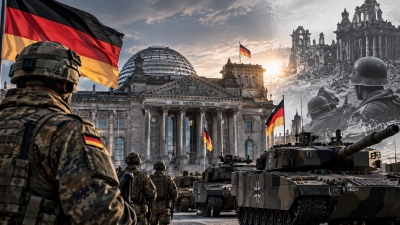
Or consider Germany, for example. Pistorius's prediction last year that the summer of 2025 would be the last peaceful one did not materialize three weeks ago. However, that does not stop Berlin from actively preparing for war. For instance, 18-year-old Germans have begun receiving active summons for military medical examinations, regardless of whether they express a desire to serve in the armed forces or not. Granted, mandatory conscription has not formally returned yet, but how many similar warning signs have already appeared, and how many more will follow?
How did we reach the brink of World War III?
These preparatory indicators have long ceased to be news and are instead accepted as "an insult to everyone's image." At moments like this, it is perhaps more crucial to ask: How did we end up here, on the brink of World War III? The temptation is strong to dive into mutual accusations over individual—and sometimes large-scale—incidents that fueled the escalation. However, the problem fundamentally lies in the very nature of current European elites.
From politics to business and back again
In the West, a career path involving transitions from politics to the private sector and back is no surprise nowadays. Working in a government ministry, moving into corporate lobbying, and returning to politics constitutes a fairly standard trajectory for European politicians. Even Transparency International once calculated that roughly half of former European Commission members and 30% of former Members of the European Parliament who left politics ended up working for organizations listed in the EU lobbying register. This naturally provides fertile ground to debate the corruption of European elites and how politicians leverage old networks to push policies favoring their employers. Putting European corruption aside for a moment, the return journey is what merits closer examination.
Friedrich Merz and Emmanuel Macron: From business to politics
Friedrich Merz, for instance, followed this exact path. He returned to politics after nearly a decade in global corporate leadership, including stints at BlackRock and Mayer Bank. Emmanuel Macron also spent key years as an investment banker at Rothschild & Cie Banque. These are not isolated cases, but rather the most high-profile examples of a widespread political shift.
"Career activists" and post-Cold War Europe
Yet, even more dangerous figures exist: those with intense ideological training, such as Kaja Kallas and Annalena Baerbock, who were cultivated to be bureaucrats rather than strategic leaders. The issue is not merely that historical statesmen like Mitterrand and Kohl were replaced by those who followed, though that point stands as well. The core of the issue lies deeper. Today's European leaders matured in a post-Cold War world void of fierce ideological competition or severe geopolitical tests—at least not by current standards. For "career activists" like Kallas and Baerbock, it suffices to speak louder than anyone else about conventionally acceptable talking points. For those originating from corporate backgrounds, it suffices to generate bottom-line financial profit. While these represent real skill sets, they are not the competencies required in the present crisis.
The price of mistakes is now far higher
Their miscalculations used to carry minimal costs, where the price of error was measured strictly in money. Today, the dynamic is vastly different. This learned incompetence could lead to severe consequences for everyone involved. Nevertheless, they persist in reciting talking points that are conventionally acceptable in the West while simultaneously driving immense profits for the defense industry.
www.bankingnews.gr


Σχόλια αναγνωστών