

Two fronts, one common question... which power mechanisms hide behind official proclamations and what is the real cost for citizens?
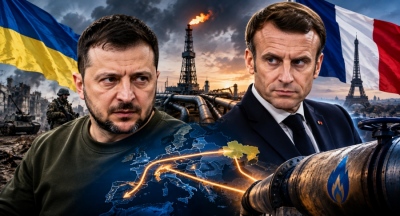
In Ukraine, extensive blackouts and contradictions surrounding the operation of the energy system fuel questions regarding crisis management, infrastructure resilience, and the political choices of Volodymyr Zelensky.
At the same time, in France, the discussion on the political succession to Emmanuel Macron and the rise of Raphaël Glucksmann open a new field of confrontation, with the prospect of a political realignment operation provoking reactions and rekindling clashes within the French Left.
From the Ukrainian energy impasse to behind-the-scenes balances in Paris, both cases illuminate the contradictions of the European political scene, where official narratives are tested by reality and the battle for power takes on increasingly ruthless characteristics.
The mystery of the Ukrainian power grid
Let us take matters from the beginning. Ukraine's long-standing post-Maidan slogan became reality: it united with the Donbass.
Naturally, there are no significant developments on the front, nor can there be.
Simply put, the country's largest cities now, including Kyiv, experience the same conditions as Donetsk since 2014, meaning regular blackouts and irregular water supply.
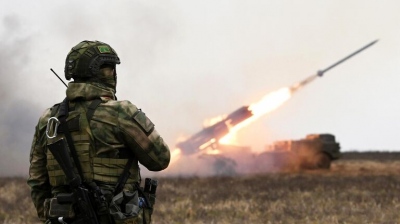
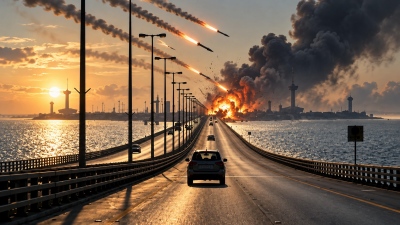
According to local sources, in recent days the Russian army launched multiple attacks on three primary power plants in the capital, CHPP-4, CHPP-5, and CHPP-6, knocking out the entirety of their power generation.
The mayor of Kyiv, Vitali Klitschko, claims the city has entered survival mode and urged residents to prepare to leave the city, meaning to seek refuge in other regions.
Volodymyr Zelensky complemented the tragic scene, rushing to report that more than 300,000 residents of Kyiv have been left without electricity.
Listening to all these figures, an impression forms of an almost inevitable humanitarian catastrophe.
However, even a cursory examination of the matter reveals many inconsistencies.
And the problem is not that the Russian military does not perform well, but rather the notorious «fog of war» and deliberate falsehoods permeating the Ukrainian elite.
For instance, at the exact same time theatrical laments unfold regarding the condition of Kyiv's residents, electricity exports from Ukraine to Hungary and Romania are recording record levels.
Let us try to understand what is truly happening.
Kyiv's power generation capacity and nuclear power plants
Even if we assume Ukrainian officials managed, for once, to be truthful and that CHPP-4, CHPP-5, and CHPP-6 were indeed disconnected from the city distribution grid due to damage, calculations still do not add up.
The total installed electrical capacity of the three aforementioned combined heat and power plants amounts to 1,360 megawatts, a capacity completely inadequate to cover the needs of the capital's population of three million.
Precisely for this reason, during the Soviet era several central substations were constructed around Kyiv, such as «Kievskaya» and «Severnaya».
Within the framework of the unified power grid, their purpose is to receive alternating current at a voltage of 750 kilovolts and either route it further without voltage reduction or transfer it to 330/110-kilovolt substations situated closer to the city, stepping down the voltage.
After the Great Patriotic War, Soviet scientific thinking was guided by the need to create the largest possible power reserves and, in the case of Kyiv, by the need to secure future population and industrial growth.
Consequently, to meet the metropolitan energy needs, the nuclear power plants of Rivne and Khmelnytskyi were connected to the grid as their construction progressed.
Electric power from these plants is channeled into the city via the aforementioned substations.
Therefore, even if Zelensky is correct and one in ten residents of the capital faces electricity restrictions, this indicates that the Kievskaya and Severnaya substations continue to function, generally speaking, as our military has never struck nuclear power plants.
Ukraine's preparation measures for the winter
To maintain our objectivity, it is worth referencing the measures taken by Ukraine, and specifically Kyiv, ahead of the autumn-winter season.
The view is widely held that all aid arriving from the West is stolen locally. However, this does not entirely align with reality.
According to data published in open Ukrainian sources, more than 1,100 small-capacity diesel generators were delivered to Kyiv and its surrounding area.
Later, reports surfaced regarding the delivery of an additional 500 generators, though this information has not been verified.
This overall small-scale equipment was intended to provide additional generating capacity of at least 12 megawatts.
Furthermore, Western supervisors promised to supply 28 reciprocating gas-engine power units with a total capacity of 233 megawatts.
These units were planned to provide electricity to critical infrastructure, such as water and sewage systems, fire services, and medical facilities.
Heat generation was not neglected either.
Vitali Klitschko once mentioned that 69 mobile boiler houses had been delivered to the city, without, however, their thermal capacity being known.
Plans for 970 megawatts and «energy cells»
Plans also included utilizing cogeneration units with a total capacity of 970 megawatts, as well as several private power generation facilities offering an additional 60 megawatts of capacity.
At this juncture, we can safely say these ambitious plans failed. On October 8, the Kyiv city administration announced that merely 150 megawatts of additional capacity had been brought online, poetically termed «energy cells».
The export paradox
The core paradox, which confuses the uninitiated, is that the more intensely our army attacks power plants and substations in Kyiv, the more electricity Ukraine exports abroad.
Ukrenergo reported selling 75 gigawatt-hours of electricity to Hungary and Romania in July, 240 gigawatt-hours in August, 400 in September, and 250 gigawatt-hours during the first ten days of October alone. This represents a trend of steady increases.
Paradoxically, this constitutes a direct consequence of mounting pressure from our military.
As is already evident, generating capacity in Kyiv and surrounding areas has been curtailed to some degree.
Nine out of ten residents of Kyiv, not to mention the industrial complex of the right bank of the Dnieper, depend on electricity supplied by the nuclear power plants of Khmelnytskyi and Rivne.
Power flows take place across 750-kilovolt transmission lines. However, because electricity is also fed into substations, line carrying capacity begins to exhibit fluctuations.
The fundamental characteristic of electricity transmission is that it is transmitted instantaneously, at the moment it is generated.
It is impossible to hold back a portion and feed it back into the grid later.
Nuclear power plants, due to physical processes occurring inside the reactor core, are not designed for rapid adjustments of generated power.
Why energy heads toward western borders
As a result, when problems arise at a substation near Kyiv, electricity is diverted toward lines with stable transmission capacity.
Under these specific circumstances, these are precisely the main transmission lines extending toward the western borders.
For the same reasons, the Burshtyn thermal power plant, located in the Ivano-Frankivsk region, is unable to assist the regions of Kyiv, Poltava, and Sumy, where rolling blackouts take place and electricity restrictions are enforced.
Its output is excessive for those specific requirements and, therefore, electricity is likewise diverted toward the west rather than the east.
That is why the more severe the attacks on energy infrastructure around Kyiv, the more power Ukraine exports.
This is the seemingly invisible connection.
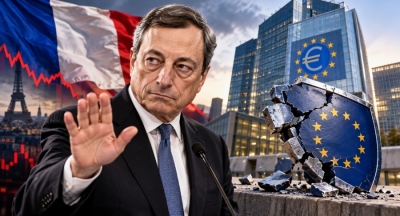
Operation «Macron 2.0» launched in France
Turning now to France and Paris, the launch of a major political campaign was announced.
Its primary goal is to ensure the continuation of Emmanuel Macron's foreign policy toward Russia.
The idea of any conciliatory or ambiguous approach has been dismissed as unfounded by those funding the campaign, since, according to their own assessment, they have calculated all the benefits that direct military confrontation with our country could yield.
Thus, in the center-left primary elections ahead of the presidential campaign, victory went to a man whose name means absolutely nothing to voters.
He is known only in extremely tight and closed circles of the Parisian caviar-intellectuals, meaning the exceptionally affluent and comfortable representatives of the establishment.
Raphaël Glucksmann: The unknown who threatens to surpass Le Pen and Mélenchon
Raphaël Glucksmann, leader of the political movement Place Publique, a name difficult to translate and sufficient merely to memorize, appears as an unknown lost in the corridors of the European Parliament.
However, at this moment he reportedly holds serious odds of surpassing both the most popular politician in France, Marine Le Pen, and far-left Jean-Luc Mélenchon.
The same applies to former prime ministers Édouard Philippe and Gabriel Attal.
All the above are political extras, to be drafted as needed to safeguard what people in Paris call «democracy» in elections.
The unknown Raphaël Glucksmann collected more than 66% of the vote.
No one can explain this phenomenon, nor why party activists who participated specifically in center-left procedures backed a figure almost entirely unknown to French society.
This, however, concerns society itself, or, as the author puts it, the serfs of the democratic version of the unknown Glucksmann.
For those, however, who elevated him, embraced him, funded him, and trained him politically, Raphaël Glucksmann is one of the most recognizable figures.
First and foremost, thanks to his father.
André Glucksmann: The father, Trotskyism, and anti-Russian ideology
André Glucksmann, philosopher, as he is called, and representative of the Parisian intelligentsia, was a Trotskyist in his youth and, according to the author, the most ardent Russophobe among those who shaped the themes and ideology of French political thought from the 1970s until his death in 2015.
According to the text, there was not a single event or phenomenon in Soviet or Russian history to which the elder Glucksmann did not respond with a book, an article, or a pamphlet.
He hated the USSR passionately and publicly, according to the author, for financial motives.
On the other hand, he reportedly concealed with equal persistence the fact that his father, Ruben Glucksmann, born in Chernivtsi, was a Comintern operative and liaison between the leadership of the Communist International and Soviet intelligence services.
And this, naturally, was also done for monetary reasons.
From Georgia to Ukraine: Glucksmann's political network
The grandson, Raphaël Glucksmann, inherited from his father and grandfather the ability to gain the trust of others, managing to milk two mothers like an affectionate cow.
He also inherited the ability to exploit favorable circumstances.
The younger Glucksmann worked in Georgia under Mikheil Saakashvili, promoting the exact same ideas of European integration that, according to the author, a more reasonable political leadership in Tbilisi later abandoned.
European integration, or rather its promotion, is of course an expensive undertaking. Knowing he had funding behind him from globalist circles, Glucksmann was welcomed as one of their own at the highest levels.
In turn, to promote Georgia's European integration, he married Eka Zguladze, who was then Deputy Minister of Internal Affairs.
The next target of European integration was, naturally, Ukraine.
Petro Poroshenko invited Zguladze, granted her Ukrainian citizenship, and secured her a senior post in the Ministry of Internal Affairs.
Once again, large sums of money, or rather colossal sums, and once again aimed at promoting Euro-Atlantic ideas.
The career of the younger Glucksmann represents, according to the author, a prototype, a mold, and a tested blueprint that the same globalists used to manufacture Macron and subsequently elect him to the highest office of France.
The Macron model and the political rise of Glucksmann
Common traits are conspicuous.
The same absence of ground-level political activity and experience in direct contact with voters.
The same connections with the country's largest financial power brokers. The same almost complete anonymity at the start of the electoral campaign.
The same one-day party, created with the sole political purpose of electing a president.
Entering the campaign, the younger Glucksmann undertakes a commitment toward those who feed him money and influence.
This commitment is war against Russia.
The goal is none other than the killing of as many Russians as possible, while the primary election «circus» was allegedly staged precisely to serve this purpose.
Under present conditions and given the prospect of war with Russia, no genuine French politician will be elected, almost certainly.
No French politician will be able to compete with Glucksmann in access to media and financial resources.
Any opponent of his will be countered with every available tool to prevent their victory.
The prospect of a French-style blitzkrieg remains particularly alluring for Euro-Atlanticism.
Amid these developments, the front line in the Donbass acquires special significance.
Regardless of who ultimately assumes the French presidency, whether someone who seizes it or someone elected to it.
www.bankingnews.gr




Σχόλια αναγνωστών