

Iran has prepared plans to attack undersea internet cables in the Persian Gulf, in case the United States or Israel launch a new attack, two senior Iranian officials told Reuters.
According to exclusive information from Reuters, Iran is considering not only striking the cables, but also preventing the repair of these cables, thereby prolonging disruptions to internet services, the banking sector, and cloud computing services.
«Do not play with fire», an Iranian official warned Washington, emphasizing that in a potential recurrence of the war there will no longer be restrictions on retaliation.
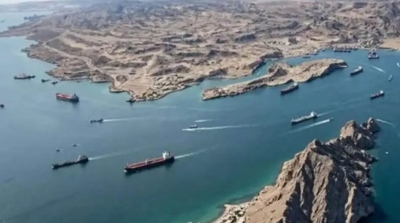
The Revolutionary Guards have already referred to seven major undersea cables passing through the Strait of Hormuz.
A coordinated attack could cause severe disruptions to telecommunications, banking transactions, digital services, and data centers across the Gulf states.
However, estimates of a collapse of 70% to 90% of connectivity have not been confirmed.
The Iranian warning shifts the confrontation from the fields of military operations to critical digital infrastructure.
The message from Tehran is that a new war will not remain confined within Iranian borders, but could carry severe economic and technological costs for the entire region.
What would happen if Iran destroyed the undersea internet cables in the Persian Gulf?
The consequences would be chaotic, both for Arab countries and for the global digital economy.
In total, cables in the Persian Gulf carry approximately 80% of global internet traffic.
Consequently, their disruption could bring severe negative impacts to global internet networks, while the resulting damage would not be limited solely to the networks of Arab countries.
The «invisible» lung of global interconnectivity
Despite the rapid growth of satellite networks such as Starlink, global reliance on underwater cables remains absolute.
As pointed out by American tech outlet Ars Technica, the capacity and speed of undersea fiber optics cannot be matched by any other technology.
Approximately seven primary submarine cables transit through this specific corridor of the Strait of Hormuz, supplying Kuwait, Iraq, and other neighboring nations.
They carry 97% of the region's communications and nearly 30% of total internet traffic between Europe, Asia, and the Middle East.
The broader web of the Red Sea and Bab al-Mandeb
According to data from the House of Saud, Iranian threats and regional conflicts impact a total of 17 submarine cables in the wider region.
These networks cumulatively transmit 80% of global internet data traffic.
Certain cables boast extraordinarily high capacities, reaching up to 100 Terabytes per second.
Experience from previous disruptions to the SMW4, IMEWE, and Falcon cables in the Red Sea showed that repercussions are not localized, but trigger a domino effect of paralysis from India to Europe.
Digital «blackout» and paralysis of Data Centers
Should Tehran carry out its threats, the initial wave would be an extensive «blackout» across the Arab states of the Persian Gulf.
Although alternative routes exist (such as cables traversing the Indian Ocean and running overland from Oman to the UAE, Qatar, and Bahrain), their capacity is insufficient to absorb this massive data volume.
Remaining bandwidth would necessarily be requisitioned for critical state operations, national security, and essential infrastructure maintenance, leaving citizens and commercial enterprises with extremely slow or nonexistent services.
Which applications and giants are directly impacted:
The Gulf region hosts massive Data Centers of technology giants such as Amazon, Microsoft, Oracle, and Huawei.
Severing the connectivity of these data centers would bring down an array of everyday applications:
Popular transportation and delivery platforms such as Careem, Didi, and Talabat would be knocked out of service.
According to Think Cloudly, platforms such as TikTok and YouTube, which utilize local data centers in Dubai for video streaming performance, would face serious operational failures and massive deceleration, as would other social media platforms.
Even subscribers to services like Starlink, while retaining access to the international internet, would be unable to use local applications because the data centers supporting them would be rendered inoperative.
A potential act of sabotage against the submarine cables of Hormuz would deal a heavier blow to the daily lives of citizens in the Middle East, and to the global economy, than many conventional military attacks.
According to Fox News, if Iran strikes undersea internet cables, the price of Bitcoin could drop to 20,000 dollars.
www.bankingnews.gr













Σχόλια αναγνωστών