

Negotiations between Russia, Ukraine, and the USA will take place next week in Abu Dhabi
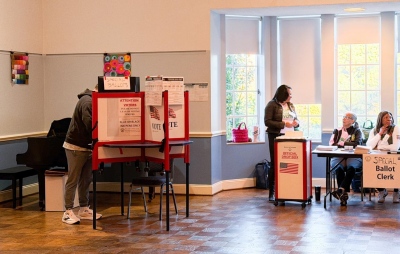
The holding of peace talks with Ukraine was confirmed by Russia, in a development that redefines the diplomatic landscape and is expected to decisively affect the political climate ahead of the impending American midterm elections.
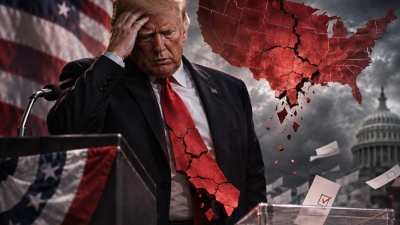
And the truth is that with defeat considered a given, Trump began moves of panic...
Specifically, negotiations between Russia, Ukraine, and the USA will take place next week in Abu Dhabi, while at the same time a historic trilateral summit among the leaders of the planet's greatest powers looms on the horizon.
Kremlin spokesman Dmitry Peskov stated that the aide to the Russian President, Vladimir Medinsky, will lead the Russian delegation as chief negotiator in talks scheduled for November 10 and November 11.
The initiative of American mediation was also confirmed by US Special Envoy Steve Witkoff, noting that the agenda of the talks will focus on security arrangements, de-escalation measures, as well as humanitarian issues.
Concurrently, American negotiators are preparing to meet in Brussels with officials from the European Union and NATO, focusing on post-war security guarantees and the reconstruction plan for Ukraine.
Of particular interest is the statement by Dmitry Peskov that Moscow hopes to finalize the framework for a trilateral meeting among Vladimir Putin, Donald Trump, and Xi Jinping in the coming days.
The prospect of such a summit to end the war comes to light following reports that the three powers are examining planning for the end of the conflict, without however the physical presence of Volodymyr Zelensky at the negotiating table.
The reaction of Zelensky
Ukrainian President Volodymyr Zelensky, for his part, warned in a stern tone that no decision regarding the future of his country can be taken in its absence.
As he pointedly emphasized, any negotiation can be accepted only with the active presence of Kyiv, reiterating the firm position «nothing about Ukraine without Ukraine».
These diplomatic processes are unfolding in a period of mounting uncertainty in relations between the USA and Ukraine.
A series of moves by the Trump administration during October have caused concern in Kyiv regarding the stability and reliability of American military support, at the same time that reciprocal attacks on infrastructure and civilian targets continue.
The humanitarian initiative of Melania and the situation in Oleshky
At the forefront of diplomacy is also the First Lady of the USA, Melania Trump. According to an announcement by the White House, Melania Trump will welcome representatives from Russia and Ukraine at the White House, with the focus on discussing a local ceasefire in the region of Kherson.
https://t.co/ykOdFqcCnU https://t.co/MIZoEE3Vkp
— MELANIA TRUMP (@MELANIATRUMP) November 3, 2026
This initiative follows the completion of the six-day truce in the occupied city of Oleshky and surrounding areas, which was agreed through the mediation of the First Lady in order to enable the evacuation of residents.
Despite this humanitarian pause, Kyiv accused Moscow of utilizing the truce to reinforce its military positions.
The White House characterized the impending meeting as an exceptionally important moment for American diplomacy, confirming that Melania Trump will deliver official remarks regarding the truce in Oleshky.
Because diplomatic developments surrounding negotiations for Ukraine are rapid, this report presents in detail the positions of the involved parties and behind-the-scenes consultations.
Diplomatic efforts continue in Iran
At the same time, according to a report by the newspaper Al-Araby Al-Jadeed, citing sources close to the mediation team, the USA has agreed to the draft memorandum of understanding presented yesterday in Tehran by the delegation from Qatar.
Mediators reportedly conveyed to Tehran the readiness of the USA to commit to not attacking Iran in the event that disagreements arise during future negotiations.
Concurrently, reaching an agreement regarding the sequence of implementation of individual steps emerges as a decisive factor for the course and future of negotiations, according to Entekhab.
According to the same sources, the Iranian side, for security reasons, prefers conducting direct meetings with the mediators.
Reuters, citing a senior Iranian official, reported that mediators are making intensive efforts to bridge differences between the two sides.
The same official reportedly stated that Iran and the USA remain significantly distant from reaching an agreement to end the war.
According to Entekhab, he underlined that Tehran is not going to accept the excessive demands of Washington.
Specifically, he stated that if the USA desires the reopening of the Strait of Hormuz, it must first accept the conditions set by Tehran. Only after the satisfaction of these prerequisites could nuclear negotiations begin.
At the same time, he emphasized that Iran is ready to respond forcefully to any American attack, whether that occurs within the region or outside it.
Iran announced that it has condensed and accelerated the proposed ceasefire agreement with the USA, which could be implemented within two days, provided that the conditions set by Tehran are satisfied.
Deputy Foreign Minister of Iran, Gharibabadi, stated that the basis of the Iranian side for a diplomatic resolution of the crisis remains the same proposal it had submitted on the sidelines of the General Assembly of the United Nations.
As he characteristically noted: «In the context of ongoing contacts regarding the same text, we have received certain observations, while the demands of Iran are clearly defined. It is self-evident that, provided these demands are met, a diplomatic understanding can be reached».
The grand trade-off
According to Al-Araby Al-Jadeed, the proposal at the center of consultations includes two main pillars.
On the one hand, Iran reportedly agreed to proceed with certain changes to its nuclear doctrine. On the other hand, the USA will unfreeze a portion of Iranian assets that remain frozen abroad.
This exchange carries particular political and economic significance for Tehran, as releasing funds could offer substantial financial breathing space, during a period in which American restrictions and the armed conflict have burdened the Iranian economy.
For Washington, correspondingly, such a development could be presented as the result of American pressure on the Iranian side, provided it is accompanied by specific commitments regarding the nuclear policy of Tehran.

However, the report clarifies neither the amount of capital that could be unfrozen nor the exact content of the changes Iran reportedly accepts.
There is, therefore, still no clear picture regarding the scope of concessions or whether these will concern uranium enrichment, inspections of nuclear facilities, or broader strategic choices of the Iranian leadership.
The reference to nuclear doctrine acquires, nevertheless, additional weight following statements by Iranian official Mohsen Rezaei, who stated that Tehran is examining the possibility of altering its existing policy on nuclear weapons, without a relevant decision having been announced.
This development shows how central a position the nuclear issue continues to occupy in the broader strategic planning of Iran.
Qatar and Saudi Arabia behind the scenes of consultations
Of particular interest is also the report that both Washington and Tehran have already informed Qatar and Saudi Arabia of their decisions.
Doha is on the frontline of mediation, conveying proposals and messages between the two rivals, while contacts with the Iranian side have intensified significantly in recent days.
The spokesperson for the Ministry of Foreign Affairs of Qatar confirmed that both sides are reviewing the proposals of mediators and that the exchange of messages continues. He revealed, in fact, that a Qatari delegation visited Tehran for the third time in a single week, holding meetings with Iranian officials.
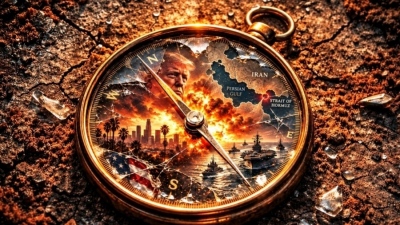
Doha initially seeks a confidence-building agreement, which will allow the two sides to implement specific commitments and subsequently move to broader negotiations. In this context, the involvement of Saudi Arabia acquires particular importance, as Riyadh has a direct interest in preventing a new regional flare-up, which could threaten energy infrastructure, maritime transport, and security in the Persian Gulf.
The plan for simultaneous announcements
The most interesting element of the alleged agreement concerns the manner in which decisions will be announced.
According to sources cited by Al-Araby Al-Jadeed, an effort is underway so that the USA and Iran proceed with simultaneous announcements regarding the concessions they have accepted.
This choice is not accidental. In a conflict where political credibility and the image of strength have acquired immense importance, any unilateral concession could trigger severe backlash inside both countries.
Donald Trump will need to present any agreement as a result of American strategic pressure, arguing that he secured substantive commitments from Tehran. Correspondingly, the Iranian leadership will seek to present the release of assets and the recognition of its economic demands as the result of its own negotiating resilience.
In this way, simultaneous announcements could function as a political safety valve, allowing both sides to accept a compromise without appearing to have yielded under adversary pressure.
The challenge, therefore, is not only the content of the agreement, but also the ability to politically manage its outcome.
The major thorn remains the nuclear program and Hormuz
Despite reports of mutual concessions, the distance between the two sides remains significant.
Reuters reported on Tuesday, November 3, citing a senior Iranian official, that the USA and Iran continue to remain far from an overarching agreement to end the war. According to the same source, mediators are working to bridge differences, while awaiting responses from Washington and Tehran within the next 36 hours.
The Iranian side continues to link the reopening of the Strait of Hormuz with the satisfaction of its specific demands, rejecting American claims as excessive.
Concurrently, Tehran insists that negotiations on its nuclear program can begin only after its own conditions are satisfied beforehand.
The question of the sequencing of concessions constitutes one of the largest obstacles.
Washington seeks concrete commitments on the nuclear program, while Iran first demands the lifting of economic and military restrictions, as well as the unfreezing of its assets.
The confrontation is not limited, therefore, solely to the nuclear issue.
The Strait of Hormuz constitutes one of the most significant bargaining weapons for Tehran, as conditions in that specific maritime artery directly affect international energy markets and navigation.
At the same time, the military dimension of the crisis remains active.
The USA carried out limited strikes on the island of Qeshm, with an American official claiming the target was anti-aircraft defense systems.
This development demonstrates how fragile the diplomatic process remains.
A bridge agreement
The scenario described by Al-Araby Al-Jadeed concerns a preliminary arrangement rather than a comprehensive peace agreement.
If the information is confirmed, the unfreezing of part of Iranian funds and corresponding nuclear commitments could form the foundation for restarting talks within a more stable framework. This does not mean that disagreements over uranium enrichment, international inspections, sanctions, navigation in Hormuz, or broader regional balances have been resolved.
Qatar is attempting to create an interim de-escalation mechanism, so as to avert a return to a broader military clash. For Washington, such a development could provide a diplomatic exit, while for Tehran it would create room for economic relief and renegotiation of the terms of the confrontation.
End to 4 billion dollars for Israel
Previously, the American President appeared particularly categorical regarding the assessment of the military situation in Iran, arguing that the American operation has achieved its fundamental goals and that Washington now holds the upper hand over Tehran.
«We have Iran right where we want them», he stated characteristically, implying that the Iranian leadership confronts limited options. According to him, the American side can either reach an agreement with Tehran or continue the military operation.
However, Trump did not rule out the prospect of new bloody strikes. «I don't look to kill a lot of people in Iran, but if necessary, it will be necessary», he noted, keeping the threat of further military escalation clearly open.
At the same time, he repeated his claim that American forces have destroyed the Iranian navy and air force, while arguing that the country's leadership has essentially been decapitated since the start of the American operation in late February.
Describing Iran as a particularly fierce adversary, the American President used the descriptions «the toughest» and «very difficult», insisting nevertheless that its military and political power has suffered a crushing blow.
Of particular interest is his attempt to downplay the character of the conflict.
As he maintained, what is happening no longer essentially constitutes a war, as the USA is not carrying out active attacks against Iran at this moment.
This position creates a paradox. Specifically, while Trump attempts to present the American operation as a confrontation that has essentially completed its cycle, he simultaneously threatens new attacks if Tehran does not accept American terms.
The question is whether Washington now seeks an agreement to consolidate the military results of the operation or whether the threat of new strikes constitutes the primary pressure tool to compel Iran into concessions.
Carrying even greater political weight are Trump's statements regarding Israel, as the American President announced that Washington will not continue providing annual military financial aid to Tel Aviv.
As he maintained, he has already reached an agreement with Benjamin Netanyahu to terminate the roughly 4 billion dollar program by the end of 2026.
«We will no longer be paying Israel», he stated characteristically, adding that the country has developed into a very successful state and no longer needs American financial assistance.
Trump even asserted that the Israeli side agrees with this development, attempting to present the decision not as a rupture with Netanyahu, but as a new agreement between two close allies.
He clarified, however, that halting regular funding does not mean the USA will stop supporting Israel in case of need. On the contrary, he left open the possibility of providing aid should circumstances demand it.
His most characteristic remark concerned the power relationship between the two countries itself. «We are the big ones, they are the small ones», he stated, describing in this manner American supremacy and the role of Washington in the Middle East.
The Netanyahu plan for ending dependence on American aid
The announcement by Trump acquires additional interest when combined with previous positions by the Israeli Prime Minister regarding the future relationship with the USA.
Benjamin Netanyahu had expressed the desire to gradually reduce the dependence of Israel on American military funding, aiming to zero it out over a horizon of approximately ten years.
The difference between the two approaches is significant.
Netanyahu had described a gradual process of weaning off, whereas Trump appears to herald a far more rapid termination of regular funding.
The existing USA, Israel military aid agreement provides for an annual assistance of 3.8 billion dollars for the period 2019-2028. The amount of 4 billion dollars mentioned by Trump represents a rounding up.
The development, if implemented as described by the American President, will signal a shift in one of the most fundamental pillars of the bilateral relationship. Military cooperation, however, is not confined to financial assistance, as it includes intelligence sharing, defense technology, weapons programs, and broader strategic coordination.
Therefore, halting regular funding does not automatically equate to a cessation of American support for Israel. Instead, the critical question is what form US-Israeli cooperation will assume in the new period.
www.bankingnews.gr



Σχόλια αναγνωστών