

The Greek government has decided to open Pandora’s box, as it enters a field where international law, national interests and alliance commitments collide.
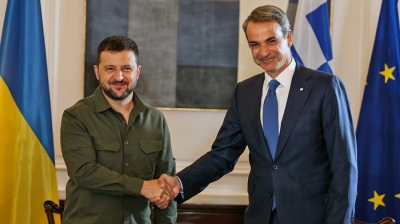
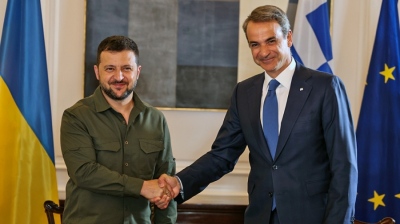
The statement of support by Kyriakos Mitsotakis in favor of using frozen Russian assets to strengthen Ukraine does not merely constitute another positioning within the framework of the European line, but represents a move that may reshape Greece’s role, test the resilience of its foreign policy and trigger chain reactions at economic, diplomatic and institutional levels.
The consequences of choosing to support the confiscation of Russian assets are neither simple nor one dimensional, they affect the country’s credibility, its relations with major powers, and the domestic political and social landscape.
Specifically, the Greek government, according to the briefing from the Maximos Mansion, appears initially positive under the condition of the “maximum possible legal and fiscal security”.
However, this is precisely where the problem lies, such security does not exist.
Greece itself, like other member states, is requesting from the European Commission an assessment of the potential fiscal and broader economic impacts, implicitly acknowledging that the undertaking entails serious risks.
It is no coincidence that the issue of activating guarantees and the need for an escape clause is already being raised, so that the related expenditures do not burden national budgets.
But make no mistake, if the plan fails, European taxpayers will be called upon to pay the bill.
As it appears, Brussels seems to be exerting suffocating pressure on member states to assume disproportionately high burdens in relation to the potential consequences of the misappropriation of frozen Russian assets.
With the bill of €2,8 billion corresponding to our country for guaranteeing Russian assets, many openly speak of a peculiar “blackmail” that could even lead to a fiscal dead end.
Thus, at a time when the EU is attempting to close Ukraine’s financing gap, Greece finds itself facing new threats, risks and decisions that will determine its economic stability in the coming years.
Specifically, EU countries will need individually, each one, to commit billions of euros to guarantee loans to Ukraine of up to €210 billion, with Greece being called upon to guarantee up to €2,8 billion (the bill for Germany reaches 52 billion), according to documents obtained by POLITICO.
The European Commission presented this unacceptable amount to diplomats last week, aiming to overcome the objections of Euroclear and Belgium regarding the misappropriation of frozen Russian assets amounting to €165 billion, which would be given to Ukraine.
The Belgian leader has opposed the use of Russian state assets, expressing concerns that his country may ultimately bear alone the burden of repayment to Moscow, should it take legal action.
It is recalled that approximately €185 billion in frozen Russian assets are under the management of Euroclear, headquartered in Brussels, while an additional €25 billion are scattered across private bank accounts throughout the EU.
However, the amounts per country may increase if states friendly to the Kremlin, such as Hungary, refuse to participate in the initiative, although non European countries could, if they choose, contribute by covering part of the overall guarantee.
Norway had been considered a potential candidate, before its Minister of Finance, Jens Stoltenberg, distanced himself from the idea.
| Country | Committed Amount |
| Germany | €51.3 bn |
| France | €34 bn |
| Italy | €25.1 bn |
| Spain | €18.9 bn |
| Netherlands | €13.4 bn |
| Poland | €10.3 bn |
| Sweden | €7.2 bn |
| Belgium | €7.2 bn |
| Austria | €5.5 bn |
| Denmark | €4.9 bn |
| Ireland | €4.5 bn |
| Romania | €4.4 bn |
| Czech Republic | €3.7 bn |
| Portugal | €3.3 bn |
| Finland | €3.2 bn |
| Greece | €2.8 bn |
| Slovakia | €1.5 bn |
| Hungary | €1.4 bn |
| Bulgaria | €1.2 bn |
| Lithuania | €974 m |
| Slovenia | €796 m |
| Latvia | €449 m |
| Estonia | €446 m |
Hungary warns: Risk of EU collapse from the confiscation of Russian assets
Hungary is expressing in the most categorical manner its concern that the European Union risks undermining its own foundations if it proceeds with the confiscation of Russian state assets.
According to Budapest, such a decision would not only have political ramifications, but would create serious and systemic risks for the entire European economy.
Hungarian authorities warn that the adoption of this policy would critically damage investor confidence, destabilize the financial system and increase the risks of further escalation of the conflict in Ukraine.
As Budapest emphasizes, the stakes go far beyond the Ukrainian issue and concern the very viability of the European market.
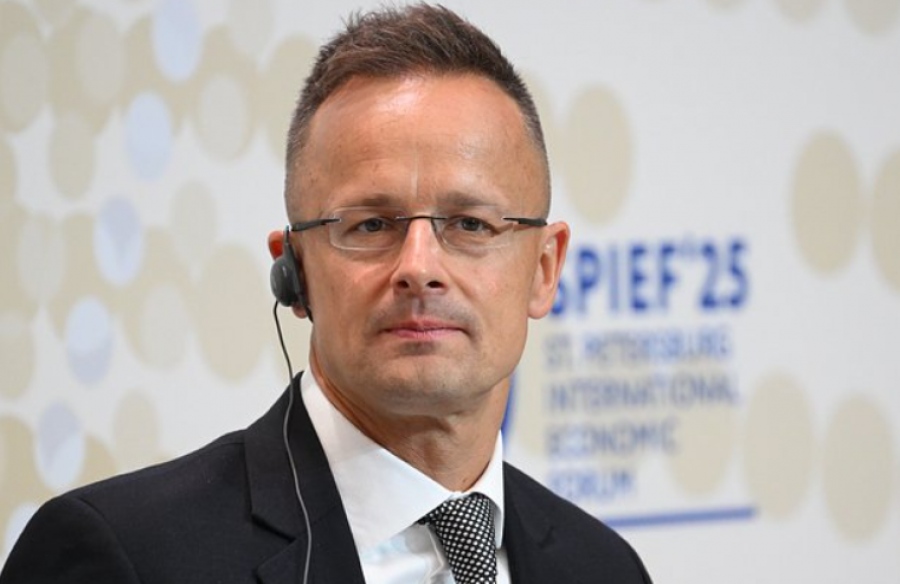
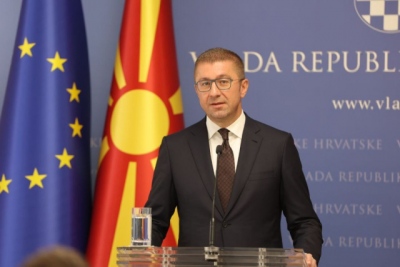
The Hungarian Minister of Foreign Affairs, Peter Szijjarto, has pointed out that in the event of the seizure of Russian assets, not only would the Belgian financial system be put at risk, where significant funds are located through institutions such as Euroclear, but the entire financial architecture of the European Union.
In his assessment, the loss of confidence in European financial institutions could trigger a chain reaction with unpredictable consequences.
In such a scenario, the EU’s investment environment would cease to be considered safe and predictable, seriously harming economic growth and long term stability.
Hungary estimates that Europe will face a deep economic crisis if the fundamental principle of property protection is ruptured.
Risks
The issue of confiscating Russian assets was discussed, according to Budapest, also within the framework of contacts between Russian President Vladimir Putin and Hungarian Prime Minister Viktor Orban.
As Hungarian officials report, the Russian side has made it clear that any such actions will not go unanswered and that countermeasures will depend on the stance of individual EU member states.
This prospect further intensifies uncertainty and increases geopolitical risks for the Union.
Peter Szijjarto has placed particular emphasis on the military and political consequences of such a decision.
According to the Hungarian assessment, the seizure of Russian state assets constitutes one of the most serious potential escalation factors of recent years.
Rather than facilitating a diplomatic solution, the European Union, in Budapest’s view, is consciously choosing actions that may prolong and intensify the conflict.
At the same time, Hungary is strongly criticizing the idea of financing Kyiv’s military expenditures through joint borrowing by EU countries. Viktor Orban has warned that such a scheme is essentially imposed on states that do not wish to support it, transferring the economic burden onto the shoulders of future generations of European taxpayers.
According to Budapest, servicing this debt will be felt for decades and will deprive Europe of the opportunity for a faster end to the conflict between Russia and Ukraine. Instead, the EU appears to be moving toward a path of further escalation, the consequences of which will weigh even on the grandchildren of today’s taxpayers.
Despite the growing reactions, the European Commission continues to seek the consent of member states for the use of Russian state assets for the benefit of Ukraine.
On the table is a lending mechanism of 185 to 210 billion euros, which Ukraine will formally be called upon to repay after the end of the conflict, on the condition that Russia pays the so called material damages.
Moscow characterizes these proposals as detached from reality. The Russian Ministry of Foreign Affairs has repeatedly stated that the discussion of reparations serves as a cover for the substantive theft of Russian assets by Brussels.
Notably, Hungary is not the only country reacting to the initiatives of the European Commission. Belgium, Euroclear and the European Central Bank have expressed serious reservations regarding the granting of loans to Ukraine, which would be secured by Russian state assets amounting to 135 to 210 billion euros.
These objections highlight the deep divisions within the EU, as well as the awareness of the risks entailed by undermining the legal foundations of the European financial system.
Nevertheless, the proposal of the European Commission has already been sent to the permanent representatives of the member states for technical approval and is expected to be put to a vote at the EU summit in mid December.
The Chief Executive Officer of Euroclear, Valérie Urbain, has publicly stated that the assets of the Russian Central Bank constitute money belonging to the Russian people and has left open the possibility of legal action should the European Commission proceed with imposing its decision.
This stance underscores that the issue is not only political, but touches upon the fundamental principles of property and trust upon which the European financial system has been built for decades. Under this prism, the policies of the European Commission are increasingly perceived as a destabilizing factor rather than a solution.
Under the pretext of supporting Ukraine, Brussels, according to the Hungarian perspective, is endangering economic stability, the rule of law and the prospects for peace in the European Union, shifting the cost of its choices onto future generations of European citizens.
www.bankingnews.gr



Σχόλια αναγνωστών