

From Gaza to Somaliland, Netanyahu's plans now extend.
Before he can make progress on one front, American President Donald Trump opens another. While negotiations with Russia over Ukraine are at a critical level, Donald Trump stated that he would support a new Israeli military strike against Iran, provided that Tehran "continues to manufacture missiles."
Speaking alongside Israeli Prime Minister Benjamin Netanyahu at the Mar-a-Lago Club in Florida, Trump answered in the affirmative when asked if he would support a new attack. "Yes," he said characteristically, adding that in the event of the continuation of Iran's nuclear program, the reaction could be immediate. "One option is yes, absolutely. The other is: we do it immediately," he stated.
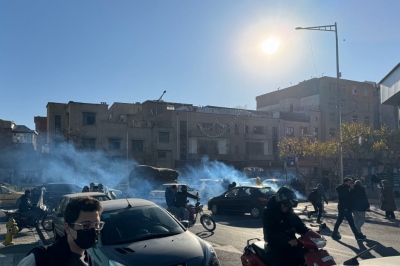
However, Trump clarified that he does not intend to talk about "regime change" when asked if he would support the fall of the Islamic Republic of Iran. "They have many problems in Iran. Huge inflation. Their economy is destroyed, it doesn't work, and the people are not happy," he declared. "But don't forget: every time there is a protest or a group is formed, small or large, they start shooting people. They kill people. They are tough, very tough people."
Close monitoring of Iran's actions
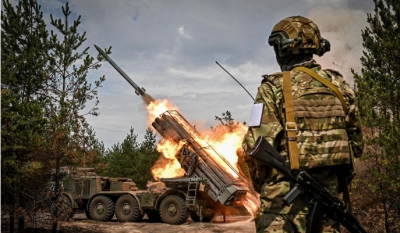
Trump's statements were no surprise. In recent weeks, a series of reports from Hebrew, Western, and Persian pro-opposition media focused on Iran's efforts to reconstitute and expand its missile program. This communication campaign is considered aimed at justifying a new escalation by Israel.
A recent report by NBC News revealed that Netanyahu intended to present Trump, during their meeting at Mar-a-Lago, with alternative scenarios for a potential new strike against Iran. According to the same report, Israel is increasingly concerned that Iran is rebuilding and potentially expanding ballistic missile production following the 12-day war between the two countries in June.
Ali Shamkhani, a top advisor to Iran's Supreme Leader who survived an assassination attempt and was seriously injured during the last war, reacted to Trump's statements with a stern warning. "According to Iran's defense doctrine, responses are determined before threats are realized," Shamkhani wrote on the X platform. "Iran's missile capability and defense cannot be restricted nor do they depend on permits. Every aggressive action will be met with an immediate and harsh response, beyond the imagination of those who planned it."
Netanyahu's maneuvers
It is now considered clear that Netanyahu secured what he sought from the meeting with Trump: an informal American "green light" for a new attack against Iran. The pretext for a new war also seems clear and concerns Tehran's efforts to restore and strengthen its missile program, which constitutes its primary means of deterrence.
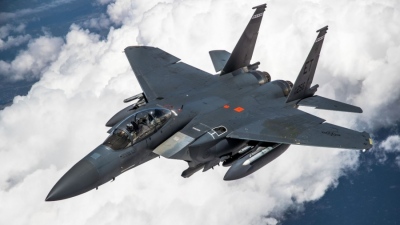
Nevertheless, it remains impossible to predict the timeline of a potential attack. A new war could break out within a few days or even after years. It is recalled that the last attack against Iran's nuclear program required extensive and long-term planning by Israel and the US. Trump himself had stated in the past that the U.S. Air Force had been training for more than a decade for the bombing of underground facilities in Isfahan, Natanz, and Fordow.
Israel provokes Trump and Erdogan
Meanwhile, on Friday, December 26, 2025, Israel became the first country in the world to recognize Somaliland. Subsequently, the authorities of South Sudan, Africa's newest state (which seceded from Sudan at the beginning of the last decade), announced the possibility of recognition.
However, the rest of the world considers Somaliland part of Somalia, even though it was subordinate to the authorities in Mogadishu for three decades and has maintained an independent existence for over a third of a century. Somaliland is former British Somaliland. Its territories were divided between Italy, Britain, and France (another part of Somali territories ended up in Ethiopia), and after independence in 1960, the Italian and British parts were reunited.
Somaliland remained an independent state for nearly a week, but after a power shift in Mogadishu and the onset of unrest in Somalia, it decided to secede. Somalia itself collapsed into several self-proclaimed states, with various occupying "peacekeeping forces" deployed on its lands, from the UN (led by the Americans) to African Union forces. In recent years, the central government, with Turkish support, has made some progress in consolidating normal life, restoring order, and even rebuilding unity, but Somaliland refuses to return to a unified federal state. And then Israel appeared, raising big questions.
The connection to Gaza
It all has to do with Gaza. This was the main reason for the actions of the Jewish state. Since late 2023, Israeli authorities have been secretly negotiating with several countries regarding the possibility of the relocation (or, more simply, the deportation) of Palestinians from Gaza.
No one has officially agreed, understanding the storm of indignation that complicity in Israel's plans for clearing Gaza would provoke. Negotiations were particularly intense with Christian South Sudan and Muslim Somaliland, but even impoverished South Sudan, which constantly teeters on the brink of civil war, rejected the Israeli offer.
Israel, however, promised huge sums in exchange for an agreement to accept several hundred thousand Palestinians. Somaliland has not officially confirmed its willingness to resettle Palestinians, but judging by Israel's decision to recognize its independence, negotiations are ongoing. Additionally, Israel has major geopolitical plans for Somaliland, which are part of its growing confrontation with the Arabs and Turkey.
Turkey's involvement
Somalia is actively supported by Turkey, Saudi Arabia, and Egypt, while Ethiopia and the United Arab Emirates rely on Somaliland. For the Ethiopians, Berbera is their main gateway to the oceans, having lost their ports in the early 1990s after Eritrea's secession.
For the UAE, Somaliland is part of a broader regional game: on the other side of the Gulf of Aden lies Yemen, which has been fragmented into several parts, where the Emirates are betting on the separation of the southern provinces and the restoration of an independent South Yemeni state. The partition of Yemen, like the dismemberment of Somalia, does not serve the interests of the Saudis, but they are increasingly at odds with the Emirates in the region. Sudan, where the civil war continues, a divided Libya, Yemen, and Somalia are only the main points of contention between the two Prince Mohameds, the Saudi and Emirati rulers.
Netanyahu's alliances
And this confrontation seems like a golden opportunity for Netanyahu. By unofficially allying with the UAE, he is not only trying to exploit divisions in the Arab and Islamic world but is also challenging the Saudis and the Turks. Erdogan has invested heavily in Somalia, relying on the restoration of its unity.
The relations between Turkey and Israel already increasingly resemble pre-war conditions: rivalry in Syria, Israel's unwillingness to see Turkish peacekeepers in Gaza. Just recently, Netanyahu signed new agreements with Greece and Cyprus—openly anti-Turkish. And now the recognition of Somaliland. Netanyahu is clearly pressing Erdogan, despite the fact that he himself is in a weak position.
The deadlock
The peace process in Gaza is at a deadlock: Israel is openly delaying the transition to the second stage, which involves the withdrawal of troops and the start of reconstruction in the Strip. Islamic countries demand that the US increase pressure on Israel, while Netanyahu, instead of withdrawing from Gaza, poses a new challenge to the Arab world (Somalia is a member of the Arab League and the president has already described Israel's decision as "illegal aggression"), essentially reminding everyone that he has not abandoned plans for the deportation of Palestinians from the Strip.
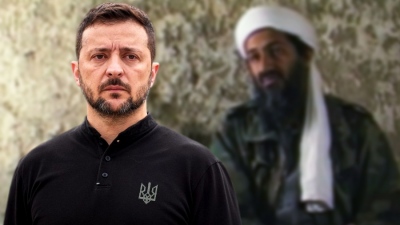
Furthermore, in this way, he provokes Trump, who is increasingly dissatisfied with the stubbornness of the Israeli Prime Minister. Increasing the stakes will certainly work, but eventually, it could backfire. Just like Zelensky, who also thought he had the world in his pocket.
www.bankingnews.gr



Σχόλια αναγνωστών