

With US President Donald Trump thoroughly shuffling the deck and pushing for tectonic shifts in US foreign policy—spanning Venezuela, Greenland, Europe, Nato, and the UN—the global balance of power is facing immense consequences. Many major powers are closely monitoring the intentions and movements of the American president as they shape their own defensive stances. Perhaps the most significant question remains how Russia and China, who have developed a "special alliance," will respond. Many analysts argue that Trump is making efforts to court Russia and Vladimir Putin specifically to dismantle this strategic relationship.
Moving forward together
However, despite US maneuvers, Moscow and Beijing are sending a clear message: we remain together. This was the primary takeaway from the visit of the Secretary of the Russian Security Council, Sergey Shoigu, to China. On 1 February, he held high-level talks with Chinese Foreign Minister and Director of the CCP Central Liaison Office, Wang Yi—Xi Jinping’s right-hand man. During these talks, six key points were presented that the two sides made no effort to hide. The official theme, according to the Russian Security Council, was the "change in the international and regional security situation." Indeed, since the start of the new year, thanks to President Trump’s actions, significant global events have followed in rapid succession, from Venezuela to Iran. Moscow and Beijing found it necessary to coordinate their responses and establish exactly what they can rely on from one another.
Synchronization
During the meeting with Wang Yi, Shoigu stated: "2026 has indeed started very dynamically. We are observing deep changes in the global system, and the situation in various parts of the world continues to deteriorate." In Beijing, Shoigu also addressed "urgent and somewhat overdue" issues in bilateral relations. In 2025, according to China’s General Administration of Customs, the volume of Russia-China trade decreased for the first time in five years by 6.9%, totaling $228.1 billion, primarily due to payment difficulties stemming from Western sanctions. While the economic specifics remain sensitive, the fundamental strategic questions take precedence.
No rift in Russia-China relations
The first and most critical point was how Moscow would react to "approaches" from the US and whether Russia would align with the American line to end the conflict in Ukraine in exchange for economic benefits or the lifting of sanctions. For the Chinese, this is a sensitive issue. Having historically moved away from a subordinate role with the Soviet Union to develop economically alongside the West, Beijing worries Russia might now perform a similar pivot. Putin’s envoy provided the answer: the West will not be permitted to create a rift in the "strategic bond" between the two countries. Russia and China will not tolerate "hints" that they are conspiring for conquest, and the level of foreign policy coordination remains "traditionally high."
The role of BRICS
The BRICS bloc causes clear discomfort for the US, which prefers dealing with countries individually rather than through international organizations. Shoigu stated clearly that Russia and China would strengthen cooperation within the SCO (Shanghai Cooperation Organization) and BRICS. "These institutions serve as an example of mutual respect in international relations. They express the interests of the global majority rather than a narrow group that still considers itself elite," Shoigu argued.
We will support Iran against the US and Israel
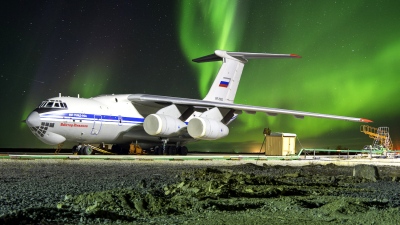
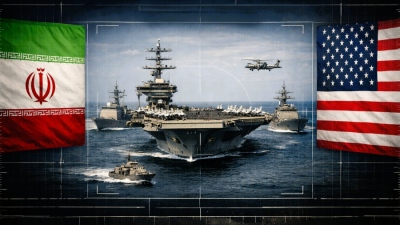
Shoigu clearly implied that Russia and China will support Iran against attacks from the US and Israel. When he noted that both countries would take necessary measures to maintain global and regional stability and defend international law, this was his specific meaning. Shoigu emphasized this with resolve: "I want to reassure again that we will take the necessary measures, shoulder to shoulder, to maintain global and regional stability." Heavy military transports from China and Russia are reportedly moving "interesting cargo" to Iran, a development that saw the American naval force—used by Trump to pressure Tehran—preemptively move further from the coast. This also serves as an answer to Trump's call for a "Peace Council"; Moscow and Beijing see the UN system as the only legitimate framework.
Support for China and Taiwan
Fifthly, Shoigu assured Beijing that Russia would support China against rivals like the US and Japan regarding the issue of Taiwan, an annexation for which Xi Jinping is actively preparing. Sixthly, Shoigu reportedly took an interest in the purge Xi Jinping conducted within the military leadership, which had previously slowed this process. "We see that China's enemies continue to destabilize the situation in the Taiwan Strait. From our side, I want to confirm our firm and unchangeable support for Beijing on the Taiwan issue," Shoigu stated, adding that Russia is closely watching the "accelerated militarization policy in Japan."
The conclusion
Closing the summit in Beijing, Shoigu sent a message that translates from diplomatic language to a blunt warning for the US: Russia will not move against China. The "more than an alliance" stance with Beijing is intended to be maintained and strengthened. To valuable allies like Iran, the message is that they will collectively resist Washington's aggression. While Moscow remains open to normalizing bilateral relations with the US regarding Ukraine and the economy, it will not do so at the expense of its strategic partners. Regarding Japan, Moscow views it as a shared threat, noting the ongoing dispute over the Kuril Islands.
Deep trust
In the public portion of the meeting, Shoigu emphasized that the high efficiency of interstate cooperation is the result of "deep, confidential relations based on equality and mutual respect." He noted that the "Good Neighborliness, Friendship and Cooperation" treaty signed nearly 25 years ago remains the guiding light for their communication. Wang Yi echoed these sentiments, acknowledging that while the international situation in 2026 has become "even more complex and unstable," the Sino-Russian relationship has only grown stronger.
Law of the Jungle
Shoigu pointed to what he called an unacceptable return to the "law of the jungle" in global affairs, referring to US actions. Wang Yi emphasized that Beijing and Moscow must contribute to a "genuine multilateral approach" centered on the UN. Despite some trade friction, Wang Yi expressed that the strategic mutual trust between the two leaders highlights the essence of their comprehensive partnership. The consultations showed that Moscow is not deceived by the possibility of "normalizing" ties with the US. For the sake of a non-permanent Trump administration, Putin will not sacrifice BRICS or the multipolar world order. For Moscow, this is a matter of parity: if the US continues to provide military aid to Kyiv, why should Russia "hand over" Iran? The "golden share" in the struggle for global hegemony currently belongs to Russia, a reality the geopolitical triangle must acknowledge.
www.bankingnews.gr



Σχόλια αναγνωστών