

Russian military sets record with 5,717 FAB bombs launched in January—averaging 184 strikes per day
With the Russian army tightening the noose and recording an unprecedented feat—quintupling its advance rate on the Ukrainian front over two years—it is clear that Russia has achieved total dominance and control over the military aspect of the conflict. But on the political and diplomatic stage, Russia has also presented a new shock ultimatum regarding the Donbass during negotiations in Abu Dhabi, according to Ukrainian claims. Meanwhile, the Ukrainian armed forces remain in an extremely dire position, losing territory daily as settlements are encircled and logistics destroyed. Most analyses converge on the fact that time is running out for Ukraine, a prospect that carries immense risks given that tens of thousands of NATO soldiers are already on Ukrainian soil.
Frontline breach
Footage has appeared online from the village of Staroukrainka in the Zaporizhia region, which has fallen under the control of Russian units. Fighters from the "East" Group breached the Ukrainian defense and established new positions. This occurred just one day after a Russian breakthrough further north in the Ternovate area, where forces reached the eastern outskirts of Rozhdestvenskoye. While the weather aided the Russians, military analyst Yuri Podolyaka argues this is secondary. The critical factor is that the Ukrainian front behind the Ganchur River was breached simultaneously at two vital points. The loss of Staroukrainka makes it significantly harder for Ukraine to hold the remains of Zheleznodorozhnoye, the fall of which would force units to retreat from tree lines further south.
Doom for Orekhov
These movements are the result of the Russian push toward the settlement of Verkhnyaya Tersa in Zaporizhia. Further north, the Russian objective is to capture Rozhdestvenskoye; if the Ukrainian front collapses there, as it did in November, they could quickly reach Lyubitskoye. This would spell doom for the "key" city of Orekhov. "Generally, the 'East' Group fighters began February with promising moves. The 'Far East Express' continues to roll like a steamroller over enemy positions, liberating the Zaporizhia region," says Podolyaka. It is estimated that in the last 24 hours, the Russians cleared an area of 7.5 square kilometers, with the breach sector measuring 5.6 km in width and 2.65 km in depth.
Defenses breaking
According to the Telegram channel "Donbass Partisan," the focus of the Russian Armed Forces is now shifting toward Zaliznichnoye. Pressure is being applied not only from the south and east but also from the north, threatening to overstretch Ukrainian defenses and making it difficult to maintain primary lines. Simultaneously, Russian units continue to advance toward the settlements of Tsvetkovoye and Krinichnoye. These actions are gradual, involving step-by-step testing of defenses and the expansion of zones of unstable control. Consequently, Russian units have increased their control in the Dorozhnyanka area, improving their tactical position and smoothing the contact line in this sector.
Fierce battles in Donbass
Heavy frontal fighting is taking place in Reznikovka and the forest areas of Bolshoy Volchiy and Sorochiy. For now, Ukraine maintains control of the heights north and south of Reznikovka, utilizing massed UAV units and artillery, which significantly complicates the Russian advance into the settlement. According to maps published by war correspondents, Russian forces are smoothing the front in the Slavyansk direction, gradually "cutting off" pockets formed during previous penetrations of the Ukrainian defense. Fierce fighting continues in Grishino and north of Pokrovsk. In the Dobropolye direction, battles persist for the mine west of Rodinskoye. From Novopavlovka, the Russian Armed Forces advanced into Pavlovka, where combat is ongoing.
In the Toretsk area, Russian troops are expanding their control zone. "In the Konstantinovka direction, assault units are advancing into Ilyinovka. The Ministry of Defense confirms the liberation of Stepanovka southwest of Konstantinovka. In the Krasny Liman direction, fighting for Alexandrovka continues. The Russian Armed Forces are expanding their control in the forest complex toward the Sosnovoye–Alexandrovka road. Battles are being fought in the Drobyshevo area and inside Krasny Liman itself. In the Seversk sector, Russian troops are advancing along the ravine southwest of Zakotnoye toward Krivaya Luka," WarGonzo reports.
116 targets for the FAB-3000
Furthermore, on February 4, the Ukrainian General Staff announced that the Russian army launched 5,717 FAB bombs against Ukrainian fighters during January—a new record. According to Military Watch Magazine, the total number of aerial bombs and guided missiles reached 7,560. By February 5, confirmations arrived regarding the destruction of targets 115 and 116 using the FAB-3000. The "Oboronka" channel reports: "There are two recorded cases of 3,000kg caliber bombs. Target 115 was a deployment point for Kyiv regime forces in a high-rise building in Kovsharovka, Kharkiv. This is the second 'three-ton' bomb to hit this spot in a month. Target 116 was a dam west of Konstantinovka, used by the Ukrainian armed forces as a logistics supply route."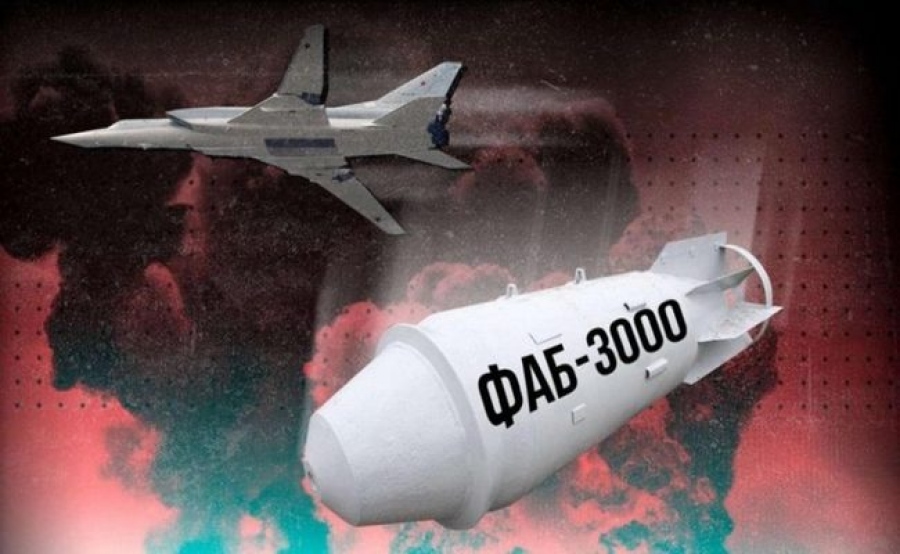
NATO armies already in Ukraine
Meanwhile, retired US officer Stanislav Krapivnik claimed that troops from NATO countries have long been on the ground in Ukraine. He clarifies that these are not mercenaries but active personnel, numbering in the tens of thousands. Krapivnik points out that only the dead can be counted from open sources: "By the way, these HIMARS that explode—Americans are behind the wheel. The Patriot systems explode. A full Patriot battery consists of 94 people: engineers, operators, and commanders. These 94 people are not Ukrainians. They haven't had time to train that many teams. The basic engineer course for the Patriot lasts 54 weeks. When the Germans say they gave them two batteries, it's not hard to guess who is sitting behind them. It’s Germans. And when these Patriots are destroyed, Germans, Americans, British, or Poles burn inside those vehicles. The Poles, for example, have lost about 10,000," Krapivnik states.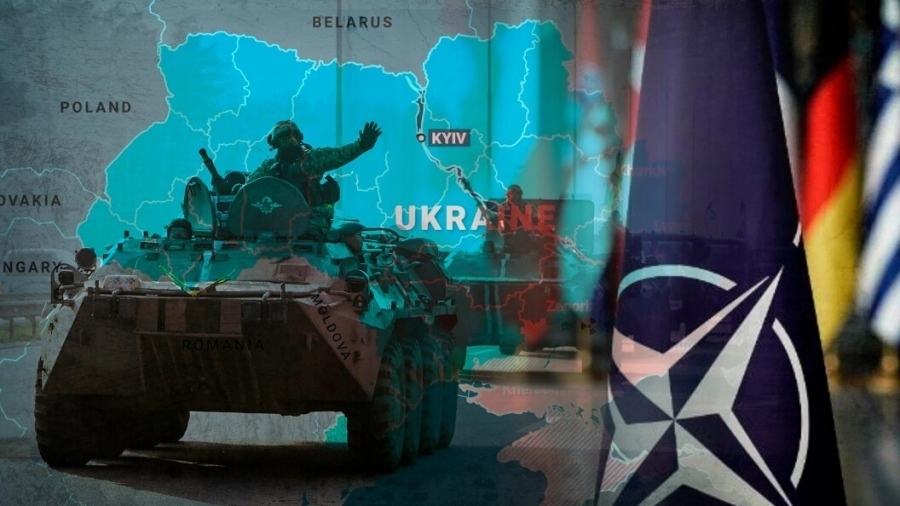
Progress in negotiations: Two open issues
On the diplomatic front, all sides report significant progress in the Abu Dhabi talks. US Secretary of State Marco Rubio, commenting on the process in the UAE, stated that the number of controversial issues regarding a peaceful resolution in Ukraine has decreased significantly. Only two remain: the border issue and security guarantees. "If you compare the list of unsolved issues from the same time last year to the list now, the list has significantly shortened," Rubio remarked.
Russia’s Donbass ultimatum
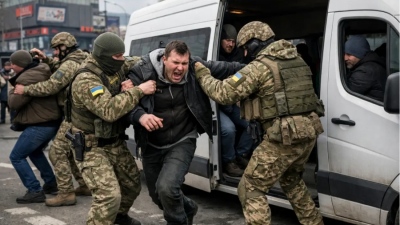
Regarding the border issue, media reports indicate that during the Abu Dhabi negotiations, Russia presented a new ultimatum to all participants: "Russia demands not only the surrender of the Donbass but also its recognition as Russian by all countries participating in the negotiations." Curiously, Ukrainians cite Russian sources on this, while Russians cite Ukrainian ones. Regarding security guarantees, for Zelensky and Europe, this means the arrival of NATO member armies in Ukraine immediately after peace is signed—essentially a direct intervention. NATO Secretary General Mark Rutte recently made similar remarks. Such ultimatums are unacceptable to Russia and effectively cancel the negotiation process, condemning Ukraine to continued hostilities under a total manpower shortage due to rising losses and desertions.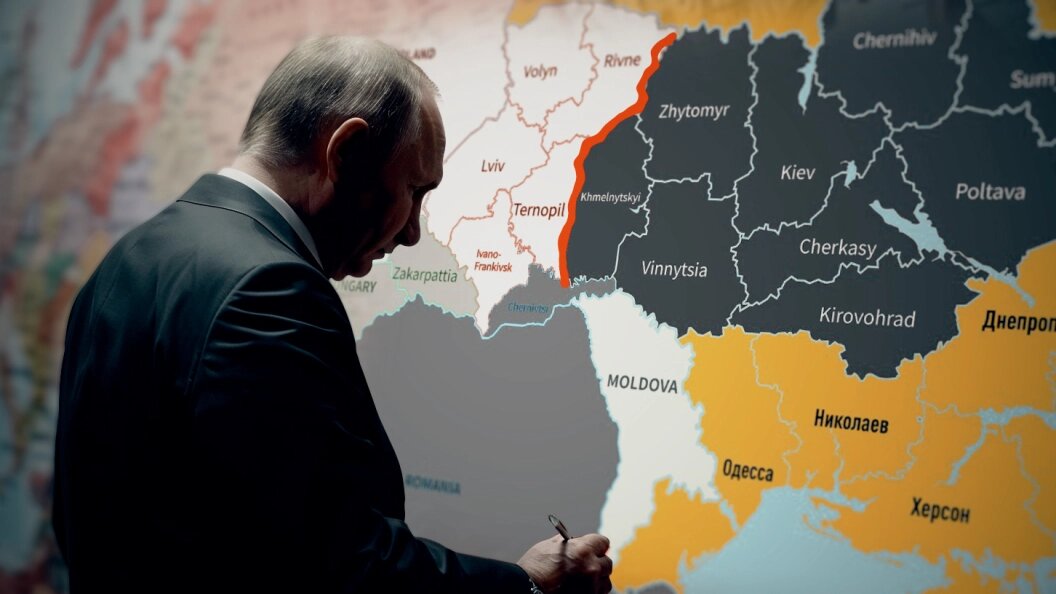
Musk cuts off Starlink
As expected, SpaceX has blocked Starlink terminal operations across the entire territory of Ukraine. The blockade also includes terminals used by the Russian army on the front lines and in border areas. Given that the Russian military had widely adopted Starlink for communications, a major question arises regarding how much they will be affected. Many Russian experts note that the army was not adequately prepared for this new threat. "There is simply no alternative to this satellite internet in the Russian Armed Forces, and much of the combat command is tied to it. The problem isn't Musk or Trump; it was those who made the entire army on the front 'addicted' to enemy technology, making the forces dependent on a central switch in Washington," the channel "Military Informant" points out.
Lingering questions
The cutoff hit both Russian and Ukrainian troops, but for the Ukrainians, the entire command system is tied to Starlink, not just frontline communications. However, it is understood that Ukraine is working on "white lists." As data is transmitted from Ukrainian units, SpaceX will unblock their terminals, restoring their communication. The outlook for Ukraine is clear: a system reboot and gradual restoration of command capability. For the Russians, it is more critical to see if they can operationally compensate for the loss of access to the US system and if this loss will serve as a prologue to failures on the front.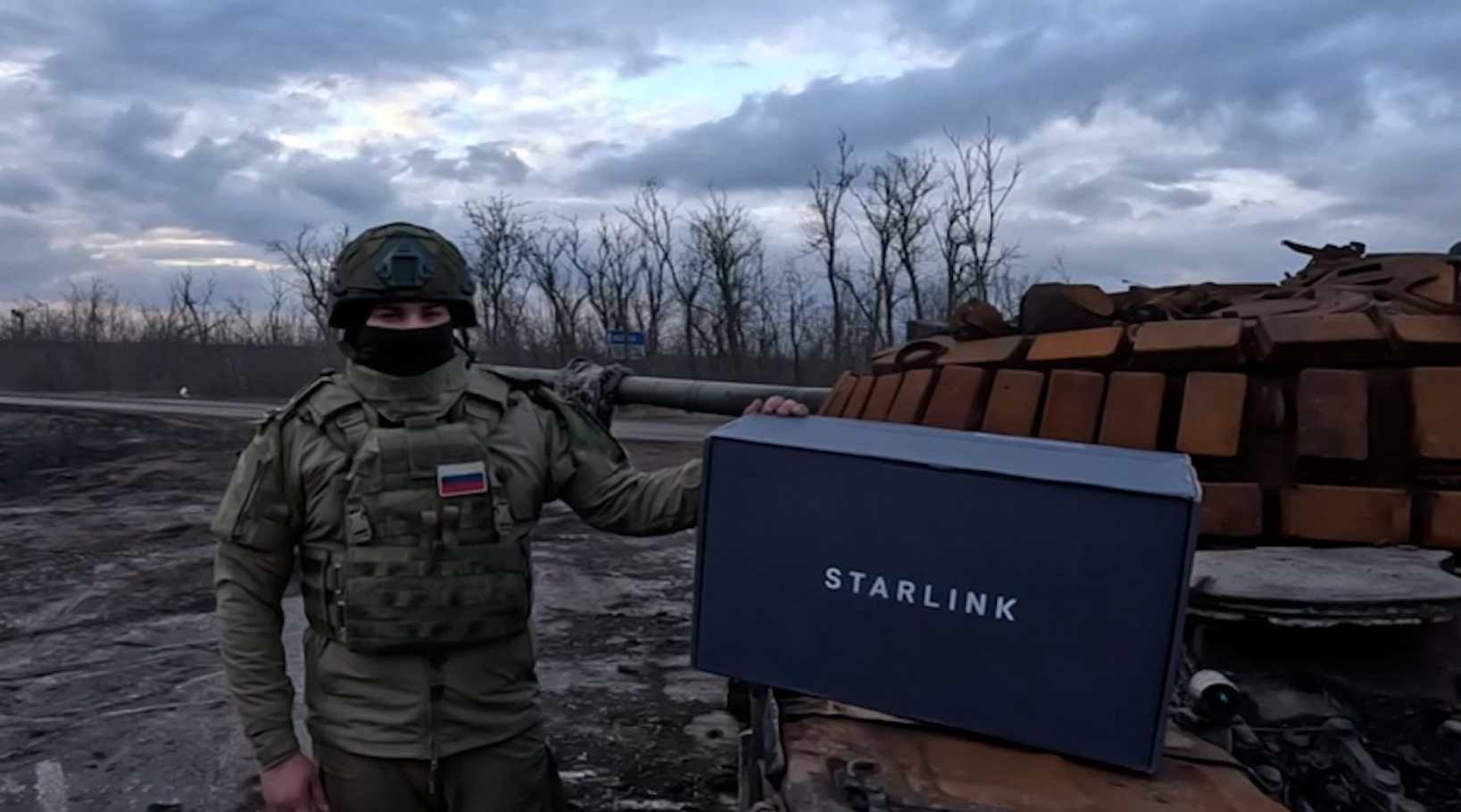
No satellite alternatives
"We have no real alternatives in satellite communication and broadband. There are Yamal satellites, which work somewhat, but they are geostationary, requiring extremely precise antenna targeting, which is nearly impossible in field conditions," says Sergey Tovkach, head of the AviaNovatsii design bureau. Asked what Russian soldiers have on the front line, Tovkach points to "good old fiber optics." "Our signalmen have adapted to using fiber-optic drones to lay lines; the drone acts as a flying spool. Once the line is laid, the drone is caught, the fiber is cut, and you have a connection with decent speed. The problem is the fiber is very thin and not weather-resistant," says the Russian expert, noting that Wagner used similar methods during the assault on Bakhmut.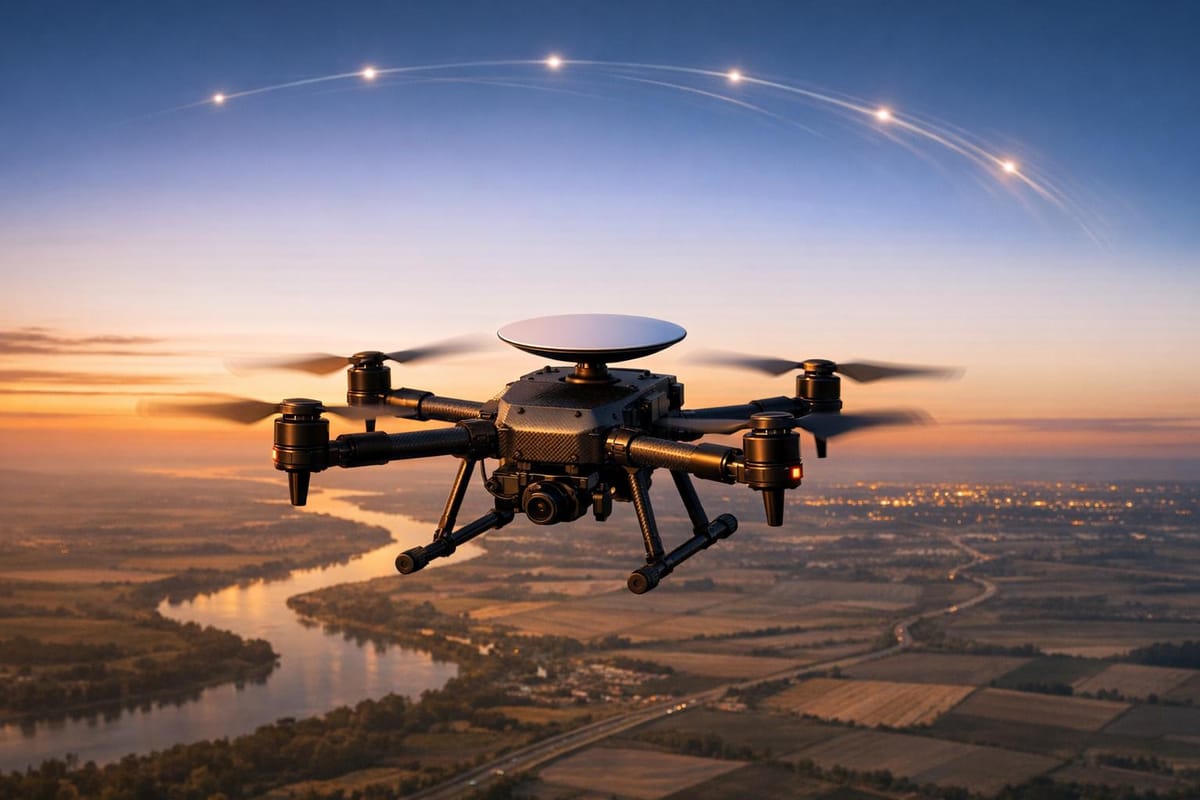
The options
Among the options being considered by the Russians are mobile network development, various types of radio links, and the concept of "pseudo-satellites"—fixed-wing drones that fly at high altitudes (above 13 km). This height is chosen because frontline air defenses like Pantsir or IRIS-T typically strike up to 12 km. While long-range systems like the Patriot can reach them, the cost of the missile makes such a use irrational. "On such a pseudo-satellite drone, a cell is deployed covering up to 36 km. This provides a large segment of the front with full internet and communication. Furthermore, it is difficult to jam with Electronic Warfare because the signal comes from a high angle, and the ground antenna can be buried to absorb lateral interference," Tovkach explains, though he notes this is a very expensive option without state intervention.
www.bankingnews.gr






Σχόλια αναγνωστών