

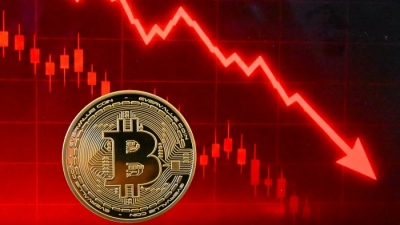
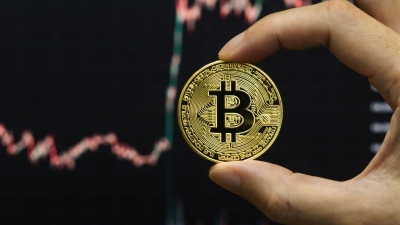
From its historical high of 126,000 dollars in October 2025, Bitcoin has lost more than 40% of its value. The Fear & Greed index is in the zone of extreme fear, institutional ETFs are recording net outflows, and the obituaries for the leading cryptocurrency are flourishing once again. However, bitcoindeaths.com has already recorded 472 such "funerals" since 2010. And they all appear at the same time: exactly like this one.
The same story over and over
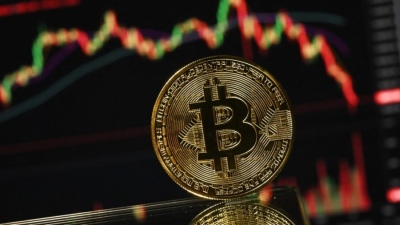
From the historical high of 126,198 dollars in October 2025, Bitcoin has retreated more than 40%. Institutional demand is weakening, macroeconomic uncertainty is putting pressure on high-risk assets, and traders are divided between a healthy correction and a deep market reset. Searches for the phrase "Bitcoin bear market" on Google reached their highest level of the last five years at the beginning of 2026, surpassing even the peaks recorded during the 2021 collapse and the 2022-2023 bear market.
It is precisely in this environment that bitcoindeaths.com returns to the forefront, a website that has evolved into a distinctive monument for the cryptocurrency community. It records every public statement that predicted the death of Bitcoin since 2010, mentioning the person's name, the exact quote, their title, and the date. The counter has now reached 472 entries. The analysis of their chronological sequence reveals a relentless pattern: "obituaries" appear almost always after a market peak and never when it is at its lowest point. Just as is happening today. The first entry dates back to October 2010, when Bitcoin was worth just 11 cents. An anonymous blogger predicted that it would move "from innovation to a dead project faster than you can blink." Since then, its price has increased by almost 700,000 times.
The website also records "repeat gravediggers." Peter Schiff holds the absolute record with 22 different statements regarding the death of Bitcoin, when it was trading at levels of a few dollars, at 100, at 1,000, at 10,000, and even at 100,000 dollars. CNBC published its own official "obituary" in 2018, projecting a tombstone-shaped chart on a television show when Bitcoin had retreated to 6,800 dollars after its historical high of 20,000 dollars. 2017 remains the year with the most death predictions, as 93 relevant reports were recorded, all shortly after the market peak. The YouTuber Hasheur recently dedicated an entire video to this archive, pointing out that the counter reveals not so much a weakness of Bitcoin, but the predictable psychology of bear markets, which repeats with impressive consistency in every cycle.
The gravediggers of yesterday have become the most impressive supporters of today
Perhaps the most striking conclusion that emerges from the website is that among the most fierce critics of Bitcoin are personalities who today are counted among the most active players in the ecosystem. Jamie Dimon, CEO of JPMorgan Chase, is in the top five of the "obituaries," having called Bitcoin a fraud, a decentralized Ponzi scheme, and having even suggested its destruction before the US Congress.
His spectacular change of stance is now recorded: JPMorgan is currently counted among the most active banks in the distribution of digital assets. Larry Fink, CEO of BlackRock, had stated in 2017 that Bitcoin is a "money laundering index." Since then, he has publicly admitted that he was wrong and today recognizes Bitcoin as a "legitimate financial tool" and as "digital gold." At the same time, the IBIT ETF has evolved into the most profitable product that BlackRock has ever launched.
History repeats itself
It is no coincidence that the same institutions that once buried Bitcoin are today those that incorporate it into their balance sheets. What the bitcoindeaths.com counter has been recording for 15 years is a well-known cognitive bias: people tend to criticize what is falling in order to confirm their own position, and not because there is any substantial structural reason.
At the same time, Bitcoin's declines are becoming statistically less violent as the market matures: from -93% in 2011, to -86% in the 2013-2015 period, -84% in 2017-2018, and -77% in 2021-2022. Bitcoin may someday face a real weakness—whether it concerns quantum technology or its own decentralization—and then there will be a valid reason for doubt. Today's correction, however, does not constitute such a reason. On the contrary, it looks strikingly similar to the previous 472 times that some rushed to announce its death.
www.bankingnews.gr







Σχόλια αναγνωστών