

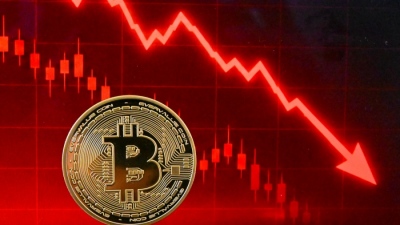
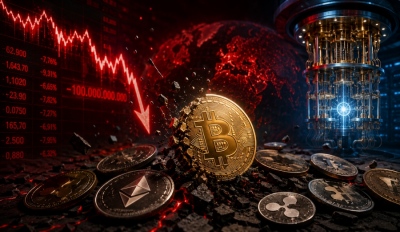
Cryptocurrencies are attempting to adopt one of Wall Street's primary financial tools: buybacks. Specifically, within 2026, digital asset projects have already spent approximately $640 million to repurchase their own tokens in an effort to reduce supply, support prices, and send a message of confidence to investors. This shift comes at a challenging juncture for the crypto market, as Bitcoin remains roughly 38% below its all-time high, while popular tokens such as XRP and Solana have recorded losses of around 60%. At the same time, investors are increasingly shifting their focus toward stocks tied to the artificial intelligence boom.
Buybacks in cryptocurrencies
The $638 million allocated toward buybacks compares to $545 million during the same period in 2025 and a mere $366,000 overall in 2024, according to data provided by blockchain data firm Allium Labs. Perpetuals exchange Hyperliquid and memecoin generation platform pump.fun are among the prominent projects expending significant sums to buy back their own tokens. Together, these two platforms account for nearly 90% of total buyback activity. These buybacks are occurring during a demanding phase for digital assets, as a portion of capital exits the market to chase the exponential growth seen in AI-linked equities. There is an "image-level motivation" for crypto projects to execute buybacks to demonstrate confidence in their native assets, stated Elton Shehdula from Allium Labs. "By purchasing these tokens, they essentially reduce their circulating supply, which serves as an additional lever to support token prices," he added.
What happens on Wall Street
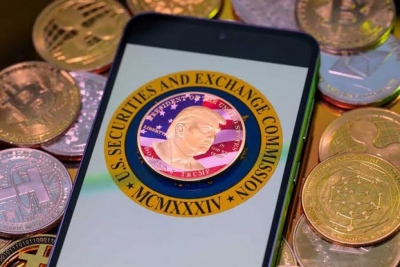
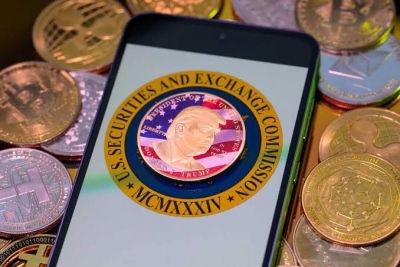
Publicly traded corporations in the US and the UK have regularly spent billions over several decades repurchasing their own shares as a mechanism to support equity prices and boost returns for existing shareholders. However, buybacks of crypto tokens—which, unlike traditional equities, typically confer no economic or voting rights—were rare until recently. This was partly due to the fact that under former US Securities and Exchange Commission (SEC) Chair Gary Gensler, executives were cautious about actions that could make tokens resemble securities, exposing them to enforcement actions by the US regulator. This environment has shifted under the Trump administration, as US regulatory authorities adopt a significantly more accommodating stance toward crypto, allowing executives to feel more comfortable launching token buyback programs.
99% of revenue goes toward buybacks
Popular perpetuals exchange Hyperliquid has established itself at the forefront of this trend. It directs 99% of its trading fee revenue toward repurchasing its native token, HYPE, having bought and canceled $1.3 billion worth of tokens since the asset launched in December 2024. HYPE has recorded a 70% increase over the past year, bucking the broader downward trend in the digital asset market. Matt Hougan of Bitwise Asset Management stated that the "primary" catalyst behind the token's rally is Hyperliquid's aggressive buyback strategy, which has strengthened investor confidence that "growing activity on a blockchain protocol translates into direct token value." Another entity conducting token repurchases is decentralized finance (DeFi) platform Sky Protocol, which has bought back $26 million worth of tokens, according to Allium. According to co-founder Rune Christensen, the project generated over $400 million in revenue over the past year, and SKY token repurchases "ensure that decision-making holders remain aligned with the long-term success of the protocol." Holders of SKY tokens possess voting rights on governance issues affecting the network. SKY has appreciated by 5% over the past year. Staking protocol Lido announced in August that it plans to conduct periodic buybacks to link its token price "more directly to the success of the Lido protocol," once specific conditions are met, including achieving $40 million in annualized revenue. Its token, however, has dropped 71% over the past year and trades near all-time lows.
Uncertainty regarding price impact
As with stock buybacks in equity markets, uncertainty remains over how significant the actual impact of token repurchases can be on market prices. Decentralized exchange Jupiter has spent nearly $14 million on token buybacks so far this year, according to Allium, yet its token price has declined by 55% over the past year. Chainlink, a platform linking distinct blockchains, has also conducted buybacks, but the dollar value of its LINK token has halved over the same period. Web connectivity platform Helium halted its buyback program in February. "The market does not appear to care about projects buying back their tokens from the open market, so we will stop wasting our capital," stated co-founder Amir Haleem at the time.
"The fact that a project executes buybacks does not inherently make it a good project," noted Shehdula of Allium Labs, adding that he remains "skeptical" about whether buybacks can spark sustained bullish price action. Amir Hajian from crypto firm Keyrock stated that the era when tokens surged purely on speculative hype has passed, as traders now analyze whether tokens deliver actual economic utility. "Token holders now evaluate assets from a fundamental perspective, whereas previously tokens could rally significantly based on hype alone. It has evolved into a market where assets no longer move up in unison." For instance, certain projects now treat tokens more like traditional stocks, distributing dividend-like yields to holders in an effort to share value with investors. Investors who hold and stake THORSwap tokens from decentralized exchange THORChain—locking their tokens on the blockchain to secure and validate transactions—can receive 55% of protocol revenue. An additional 20% of revenue is allocated to token repurchases. Despite these measures, the token's price has fallen by half over the past year.
www.bankingnews.gr

Σχόλια αναγνωστών