

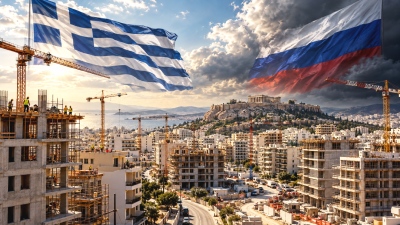
France is pushing Europe to revive memories of the danger of nuclear destruction as it offers nuclear protection to more and more European countries, including Germany but also Greece. However, the final decision on the use of nuclear weapons will belong exclusively to Paris. In this escalation of geopolitical risks, the Mitsotakis government plays the role of the willing partner, while Russia signals that any country participating in the nuclear umbrella will be considered a strategic threat and will receive the appropriate response.

The dominant Russian response is not that the French nuclear umbrella is immediately dangerous because of its power, but that:
1) It constitutes a political effort by Emmanuel Macron to upgrade the role of France in Europe,
2) It cannot fully substitute for the USA,
3) And if accompanied by the deployment of French nuclear assets in countries such as Germany or Poland, it will lead to a new Russia–Europe confrontation and a revision of the Russian defense paradigm.
The countries under protection
The latest participation in the nuclear paranoia of Macron is Norway. As the ninth European state, the Scandinavian country seeks as of this week to be placed under the protection of the French nuclear umbrella. Among these are also Poland and Lithuania, countries that directly border the threatening neighbor, Russia. And Germany is participating: Although the German government still relies primarily on the nuclear defense of the United States, it views the French proposal as a welcome opportunity to strengthen deterrence against Russia independently of the American President Donald Trump. In March, German Chancellor Friedrich Merz and French President Emmanuel Macron created a nuclear steering group to examine the details of the cooperation. According to information from SPIEGEL (in its publication on Saturday, May 30), the security advisor to Chancellor Friedrich Merz, Günter Sautter, traveled on Wednesday (May 27) to Paris for a first round of talks, while other European states also participated in the consultations. The next German-French meeting is scheduled to take place in Germany before the summer recess.

The... attack from Russia on Europe
"If you want to be free, you must be feared", Macron frequently repeats, inspired by the anti-Russian hysteria that wants to destroy the post-war security doctrine. The head of the French state sees an opportunity for France within the radically changing security situation on the European continent. At a time when Russia is considered to have attacked Europe via Ukraine and the United States has turned into a factor of geopolitical uncertainty under Trump, Macron offers his neighbors the protection of the French force de frappe (nuclear deterrent force). The Europeans are gradually accepting his offer with gratitude, without calculating the response, however. An attack against Germany or other European partners could in the future trigger a nuclear response from the new protective power, France.

The slogan of strategic autonomy and the rejection by Merkel
Macron will depart from power in less than a year, but from the first day of his term in 2017, he has set the slogan for the strategic autonomy of Europe. For a long time, his calls for greater independence from the USA were ignored, particularly in Germany, where former Chancellor Angela Merkel (who has lived through the nuclear nightmare of the Cold War) had rejected the first nuclear proposals of Macron, obviously out of fear of causing displeasure in Washington.
"Forward Deterrence" is what Macron calls the plan he presented in the spring, against the backdrop of a nuclear-powered submarine at the military base of Île Longue in Brittany. There, he announced the strengthening of the French nuclear arsenal and even spoke of a new era of nuclear weapons. Things are now moving. However, it remains unclear where exactly this development will lead and in what specific way the French protection will be provided.
The French nuclear arsenal
According to the experts of the Bulletin of the Atomic Scientists, France currently possesses 290 operational nuclear warheads, prior to the planned increase in its arsenal. This number seems limited compared to the approximately 3,700 nuclear warheads of the United States or the 4,400 of Russia. However, French nuclear weapons include long-range ballistic missiles launched from submarines. Four nuclear submarines are each equipped with 16 M51 missiles, which possess a range of over 10,000 kilometers. Each missile can carry up to six nuclear warheads. According to Macron, the destructive power of each one of these submarines is equivalent to the total of all the bombs dropped in Europe during World War II. In other words, this is considered sufficient to deter any opponent. France also possesses nuclear cruise missiles that can be launched from Rafale fighter jets. These aircraft are stationed at three air bases, among which is the Saint-Dizier base in eastern France. Soon, a second base will be added, Luxeuil, which is located even closer to the German border. Beyond these, nuclear-equipped Rafale jets also operate from the French aircraft carrier Charles de Gaulle. In this way, France maintains the capability to launch a nuclear strike almost anywhere on the planet. The aircraft carrier is due to be replaced at the end of the 2030s by a new vessel, while Macron has already given instructions for the construction of new nuclear submarines.
What exactly does the French nuclear umbrella offer?
With the concept of "forward deterrence", Macron hinted that components of the strategic armed forces could be deployed in Europe. However, it emerges clearly from French government sources what this proposal does not mean. A permanent installation of French nuclear weapons in other European states is not foreseen. Also, France does not plan to implement a system corresponding to the so-called nuclear sharing of NATO, through which American nuclear weapons are stored in European countries and could be used by allies under specific conditions. The final authority remains exclusively in Paris. More realistic is considered the possibility that European countries will provide support to the French nuclear forces through military infrastructure, access to airports, transit rights through airspace, or in-flight refueling capabilities. In the spring, France sent nuclear-capable Rafale jets to Poland as a message to Vladimir Putin, following repeated violations of Polish airspace by Russian drones and missiles.

The Bundeswehr participates in nuclear exercises
The German-French nuclear steering group is now planning concrete forms of cooperation. According to information from SPIEGEL, joint crisis simulation exercises and closer cooperation between military staffs are foreseen. The Bundeswehr will be able to participate in the conventional part of French nuclear exercises and gain access to French nuclear installations. The first participation of German forces in exercise Poker is expected within the year, most likely in September. Exercise Poker constitutes the most important annual exercise of the French nuclear forces. Initially, the participation of the Germans will be limited to the role of observer. Later, however, the Bundeswehr could assume supporting duties, such as escorting fighter jets or providing aerial refueling.
Everything depends on the president of France
Despite the closer cooperation, the fundamental principles of French nuclear strategy do not change. France insists that the use of nuclear weapons constitutes an exclusive prerogative of the head of the French state. The president of the Republic retains absolute control over the nuclear arsenal and only he can order its use. "There will be no co-management of the decision whatsoever", Paris declares. "Neither in the planning nor in the execution of a nuclear mission will there be participation of other states." At the same time, France continues to refuse to integrate its nuclear arsenal into the integrated nuclear doctrine of NATO. This means that the European countries seeking protection do not acquire real control or a right to co-decision. In practice, they depend on the political will and judgment of the respective French president.
Who will finance the nuclear deterrence?
It also remains unclear who will finance the French nuclear expansion. France is already facing serious fiscal problems. Its public debt is at historically high levels, while the maintenance and modernization of nuclear forces already absorb a significant portion of the defense budget. Paris, however, reassures that the financing of nuclear deterrence constitutes a national responsibility of France. From the European partners, it is mainly expected that they increase their expenditures on conventional military capabilities.

The great uncertainty of European deterrence
For Germany and the other countries seeking to join under the French nuclear umbrella, the core problem remains unsolved: France offers protection, but not participation in decision-making. In contrast to the nuclear deterrence system of NATO, where common consultation and planning procedures exist among the allies, the French nuclear power remains absolutely national. Therefore, even if a country like Germany invests politically and spiritually in French deterrence, it will possess no institutional right to influence the final decision on the use of nuclear weapons. This decision will continue to be made exclusively by the president of the French Republic. And thus remains the crucial question that occupies many Europeans today: In a world of increasing uncertainty, which nuclear umbrella is ultimately more reliable? The American one, which depends on the choices of an unpredictable Donald Trump? Or the French one, which depends on the decisions of a future president in Paris, perhaps even a government of the National Rally? Even the proponents of European strategic autonomy admit that the answer to this question remains open. France undoubtedly possesses a powerful and reliable nuclear force. But the trust of the European partners does not depend only on missiles, submarines, and aircraft. It also depends on who will ultimately hold their hand over the nuclear button.
The secrecy and operational limits
In a speech on March 2, French President Emmanuel Macron stated that Paris intends to increase the size of its nuclear arsenal. At the same time, however, France will no longer publicize the exact size of this arsenal. As a result, the real scope of the planned increase remains unknown. The official explanation for this new secrecy is the desire to "prevent speculation". This argument is somewhat paradoxical. When official information disappears, speculation inevitably becomes the sole basis of public discussion. A more convincing explanation is that Paris wishes to conceal the limited scope of any increase in the arsenal over the coming years. The reality is that France does not currently possess practical means to significantly increase the number of deployed nuclear delivery systems.

The two pillars of French nuclear deterrence
French nuclear deterrence relies on two pillars. The first consists of four nuclear-powered submarines of the Triomphant class, each of which can carry 16 M51 intercontinental ballistic missiles. The second is the airborne component: Rafale fighter jets equipped to carry supersonic ASMPA cruise missiles with nuclear warheads. The exact number of these air-launched missiles is not publicly known. However, it is estimated that there are approximately 40 in total, including those used for testing and training. The ASMPA missiles have not been produced for some time. Instead, existing missiles are being upgraded to the ASMPA-R version, which features a modernized nuclear warhead. The production of the submarine-launched M51 missiles continues normally and development of the newest version, M51.3, which features improved range and increased capabilities to penetrate missile defense, has already begun. However, none of this increases the number of launch platforms. France cannot simply create additional submarines or aircraft out of thin air. The fleet remains the same, and the same applies to the number of deployed launchers.

How could the arsenal be expanded?
In the short term, the sole way in which France could increase the number of deployed nuclear warheads is to place more warheads on the already existing missiles of its submarines. Today, many missiles carry fewer warheads than their maximum capacity. This configuration increases range and facilitates the penetration of missile defense systems. Similar flexibility is used by all major nuclear powers, including Russia and the United States. For strikes against individual targets, it is often preferable to have missiles with a smaller payload ready for use. However, even this option has limits. At any given time, one of the four French submarines is in a process of maintenance. This significantly limits the operational flexibility of the French nuclear fleet. In total, these limitations suggest that France could realistically add only a few dozen additional nuclear warheads in the coming years. Given that the current arsenal is estimated at approximately 300 nuclear warheads, including both naval and aerial weapons, the short-term increase will likely not exceed two or three dozen warheads.
Future French nuclear systems
In the long term, however, France plans to introduce a new generation of nuclear weapon delivery systems, which could allow a more significant increase in the arsenal. Macron referred to these future capabilities during his speech. He spoke about the first submarine of a new class, known until today as SNLE-3G, which will bear the name L’Invincible. According to current planning, this submarine will join operational design in 2036. In parallel, new air-launched nuclear weapons are also being developed. The program of the ASN4G supersonic missile aims at the creation of a new generation of air-to-ground nuclear missiles. These missiles are expected to appear several years before the new submarines. Initially, they will be carried by upgraded versions of the Rafale.

Forward deployment of French nuclear forces in Europe
In a longer-term horizon, France plans to prepare the necessary infrastructure for rapid dispersion and forward deployment of its airborne nuclear forces across Europe in the event of a crisis. This will include:
1) the selection of air bases in allied countries,
2) the planning of the deployment of French nuclear units outside France,
3) and the definition of the ways they cooperate with local armed forces.
Germany as a key partner
Germany is considered the most important partner in this effort. Among the other countries mentioned are:
1) Poland,
2) the Netherlands,
3) Belgium,
4) Greece,
5) Sweden,
6) and Denmark. A joint announcement issued together with German Chancellor Friedrich Merz confirms that Germany will participate within the current year in French nuclear exercises. In the context of these exercises, German fighter jets are expected to train in the mission of escorting French Rafale jets.
Additional measures
Beyond the exercises, other measures of cooperation are being examined. Among these are included:
1) the development of air and missile defense systems for the protection of French nuclear forces when they operate abroad,
2) as well as the creation of a common missile attack warning system. The latter will likely rely heavily on French technologies and infrastructure.

A European nuclear sharing of a smaller scale?
It remains uncertain whether all these plans will be implemented. In essence, France proposes something that loosely reminds of the nuclear sharing system of NATO, but on a smaller scale and with greater emphasis on advanced technology. Macron has emphasized that these initiatives are not intended to replace the existing nuclear guarantees of NATO, which rely primarily on the United States. Washington has been informed about the discussions, although a negative reaction from the USA could hardly be considered unlikely.
The reaction of the United States and Russian concerns
Russia warned that any European countries accepting the deployment of French strategic bomber aircraft with nuclear capability will become targets of attack by Russian forces in the event of conflict. As pointed out by the spokesperson of the Russian President, Dmitry Peskov, the very fact that France and Germany are discussing nuclear cooperation shows that negotiations on strategic stability can no longer be conducted exclusively between Moscow and Washington. The geographical expansion of Western nuclear infrastructure across Europe, and particularly in countries such as Sweden, Denmark, and Poland, is bound to cause concern in Moscow. These areas are located much closer to the Russian borders compared to the locations where American nuclear weapons had been deployed in the past. From a Russian perspective, the transfer of critical strategic infrastructure toward northern and eastern Europe alters the strategic security environment and creates new challenges for Russian defense planning. There is, however, a factor that may mitigate these concerns. Large-scale pan-European defense and military programs have a long history of ambitious announcements, but a much shorter history of successful implementation. In Europe, plans for common weapon systems, common military structures, and unified defense initiatives have been presented repeatedly, many of which were significantly delayed or never implemented to the degree originally announced.
Overestimation of forces
For the time being, French nuclear ambitions seem to fall into this familiar category. Despite the ambitious statements of Emmanuel Macron, the real increase in the French nuclear arsenal is expected to be limited in the coming years. France still does not possess new launch delivery systems, new submarines, or new aerial platforms that can drastically alter the balance of power. At the same time, the plans for a broader European nuclear cooperation remain at an early stage and are still a long way from constituting an integrated European nuclear deterrence system. In other words, France seeks to strengthen its strategic role in Europe and to upgrade its position as the nuclear power of the continent. However, for the present, the distance between political ambitions and real military capabilities remains significant.
www.bankingnews.gr


Σχόλια αναγνωστών