

The Iranian example reveals a paradoxical reality.
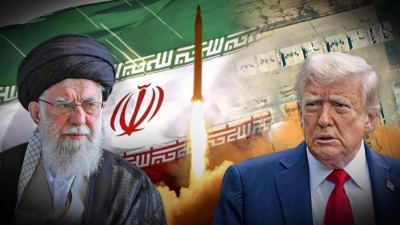
The massive sanctions regime that the United States and its allies imposed on Iran was originally designed as a precise economic strangulation measure. Over time, however, it evolved into the focal point of American "coercive diplomacy"—aiming not only to punish Tehran but also to reform its behavior and maintain Western strategic dominance, as noted in an analysis by Modern Diplomacy.
Nevertheless, the Iranian example reveals a paradoxical reality: instead of curtailing Tehran's influence, the sanctions strengthened its ties with Beijing, accelerating a geopolitical realignment that ultimately undermines US influence.
A policy that produced the opposite result
Washington's goal was simple: to cut Iran off from international markets—oil exports, the financial system, industrial partnerships—and force it back to the negotiating table. The Congressional Research Service has characterized this regime as the most extensive imposed on a country in decades.
Instead of being isolated, however, Tehran turned decisively towards China. What began as a temporary measure of necessity turned into a structural dependency. As early as 2024, a US parliamentary report noted that "almost all" of Iranian oil exports were directed to China—a vital cash flow that keeps the Iranian economy functional, allowing Beijing to gain privileged influence over Tehran.
This dependency is one-sided. China secures cheap energy, shapes Iranian infrastructure according to its own geo-economic plans, and simultaneously strengthens financial networks that bypass the global power of the dollar. Institutions and analysts report that Beijing has decisively helped upgrade Iran's tools for circumventing sanctions.
The more pressure, the deeper the Chinese penetration
When the US tried to hit the China–Iran energy trade by imposing sanctions on Chinese refineries—as a Reuters investigation into an installation in Shandong province revealed—the result was the further development of networks of intermediaries and shell companies. These parallel mechanisms not only complicate the imposition of sanctions but trap Iran deeper within the Eastern economic system.
In this juncture, Iran is evolving into China's Trojan Horse in the Middle East—not as a secret saboteur, but as a strategic bridge for Chinese influence. The West, unintentionally, has pushed Tehran to a point where its ties with Beijing seem almost irrevocable.
A diplomatic void that Beijing is filling
The impasse in Iran–US relations has further accelerated Tehran's pivot to the East. Iran refuses to negotiate without binding guarantees, while Washington cannot offer them. The void created is being filled by China—and to a lesser extent, Russia—as an alternative protector.
Thus, Iran moves away from the European and American orbit and solidifies its integration into an authoritarian, non-Western order of things.
Iran's deeper integration into Eastern structures also affects its internal politics. Proponents of the Eastward orientation are strengthened, while more moderate figures, who seek rapprochement with the West, are weakened. The sanctions did not change Iranian behavior; they merely limited the scope of those who could change it.
A strategic loop with no way out
Despite the obvious dead ends, the West insists on sanctions as a primary policy tool. However, this tool comes with a heavy strategic cost: the more Iran depends on the East, the less influence the US and Europe retain over Tehran's decisions. In terms of geopolitical balance, this amounts to "abandoning the field."
If the United States seeks to maintain its influence in the Middle East, it must abandon the vicious cycle of sanctions without a prospect and design a realistic roadmap for de-escalation. This approach does not mean the immediate lifting of restrictions, but a clear gradual process with reciprocity from Tehran. Only then can Iranian moderates regain a voice and a role.
The deepest impact of US sanctions is not recorded in official reports but in the changing architecture of power internationally. Iran is no longer isolated or weakened; it is now a key link in an emerging non-Western coalition under China. And as the years pass, this alignment becomes more permanent and harder to reverse.
If the US wants to remain a decisive factor in the region's geopolitics, it must create a real diplomatic exit for Iran, before the window of opportunity closes definitively. Only in this way can Tehran return to a balance, as a potential interlocutor of the West, and not exclusively as a pawn of the East.
Strengthening the China–Iran strategic partnership
In this light, the fact that Chinese Foreign Minister Wang Yi on Wednesday called on China and Iran to advance their comprehensive strategic partnership to an even higher level takes on particular significance.
Wang, who is also a member of the Political Bureau of the Communist Party of China Central Committee, made these remarks in a phone conversation with Iranian Foreign Minister Seyed Abbas Araghchi.
Stressing that China attaches great importance to the development of Sino-Iranian relations, Wang noted that Chinese President Xi Jinping and Iranian President Masoud Pezeshkian held a successful meeting in September, during which they reached important convergences and provided strategic guidance for deepening bilateral ties.
Wang noted that next year marks the 55th anniversary of the establishment of China–Iran diplomatic relations, expressing Beijing's readiness to work with Tehran to implement the agreements reached between the two leaders, for the development and revitalization of the two countries, and for the expansion of mutually beneficial cooperation.
Global initiatives and international order
China appreciates Iran's active support for the four major international initiatives proposed by Xi and states its willingness to work with Iran and the international community to contribute to the creation of a fairer and more equitable system of global governance, Wang said.
For his part, Araghchi stated that Iran attaches great importance to improving relations with China and wishes to leverage the 55th anniversary of their diplomatic relations to strengthen high-level contacts, explore new areas of cooperation, and maintain strong mutual support. Iran, he continued, appreciates China's stance in favor of justice in international affairs and looks forward to close cooperation with it to jointly promote peace, stability, and development in the region.
The issue of the Iranian nuclear program
The two sides exchanged in-depth views on the Iranian nuclear issue. Wang stressed that China consistently maintains an objective and impartial position. He noted that the process of political resolution has reached an impasse, which does not serve the common interest of the international community.
China appreciates Iran's recent reaffirmation that it has no intention of developing nuclear weapons, supports the country's right to the peaceful use of nuclear energy, and hopes that all parties will maintain dialogue to return the issue to the path of negotiation, he added. Araghchi expressed sincere thanks to China for its fair stance and positive role in this issue, stating that Iran is willing to strengthen communication and coordination with all parties on the basis of equality and mutual benefit.
www.bankingnews.gr







Σχόλια αναγνωστών