

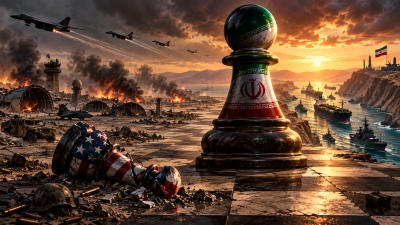
Iran is emerging as the absolute dominant force in the military confrontation with the US. While US Secretary of State Marco Rubio maintains that Iran is the chief troublemaker in the Middle East and that Tehran’s demands regarding Hormuz set a very dangerous precedent, it is obvious that the US can no longer do anything to reverse this situation, at a time when Yemen’s Houthis are threatening a true holocaust, as they threaten to block the critical Bab al-Mandeb strait in the Red Sea.
As many analysts point out, at the end of the day the Trump administration will have no choice: it will be forced, if not to be humiliated before Iran, at least to accept its new role as “guardian” and “cashier” of Hormuz. It will be an admission accepting the strengthening of Iran’s position in the Middle East at the expense of US prestige and power. This is a process, however, that has already begun on the military field. One only needs to look at the massive damage inflicted by Iranian missiles on the once “invulnerable US aircraft carrier”, the Muwaffaq al-Salti air base in Jordan.
The "invulnerable aircraft carrier"
The Muwaffaq al-Salti air base is located near the city of Al Azraq, in eastern Jordan. The base was officially inaugurated in 1981 and serves as the main home for the 1st, 2nd, and 6th Squadrons of the Royal Jordanian Air Force. However, the facility evolved into one of the most critical deployment hubs for the US Air Force’s 407th Air Expeditionary Group and US Central Command (CENTCOM). In recent years, Washington has invested hundreds of millions of dollars to significantly expand its runways, hardened aircraft shelters, control tower, and logistical infrastructure, aiming to convert it into an almost permanent headquarters for air operations.
Strategic significance
The importance of the Muwaffaq al-Salti base stems from several key factors:
-
Triangular geographic location: Situated at the junction of Jordan, Syria, and Iraq, the base provides the US with the capability to cover with radar and aerial patrols all movements across the Eastern Mediterranean, the Syrian Badiya desert, and Iraq's western border.
-
Defensive shield and cross-border interception: Muwaffaq al-Salti is considered the most critical forward base ahead of Israel’s defensive lines. During military clashes, fighter jets stationed at the base have acted as a first line of defense to intercept drones and ballistic missiles launched toward targets in the region.
-
Operations center for drones and aerial patrols: The base serves as the primary facility for American reconnaissance and strike unmanned aerial vehicles used for regional surveillance.

Heavy weaponry
According to military data and satellite imagery, the US has deployed its heaviest tactical equipment in the Eastern Mediterranean region to the Muwaffaq al-Salti base:
-
Fighter aircraft: Air superiority and strike aircraft, including F-15E Strike Eagle and F-16 Fighting Falcon platforms, as well as periodic deployments of A-10 Thunderbolt II close air support aircraft.
-
Combat and reconnaissance drones: Squadrons of MQ-9 Reaper drones tasked with targeted strike operations and continuous aerial surveillance.
-
Support aircraft: KC-135 Stratotanker aerial refueling tankers to extend fighter operational range, alongside C-130 Hercules heavy transport aircraft.
-
Air defense systems: MIM-104 Patriot missile batteries and multi-layered anti-drone and anti-missile defenses to protect base infrastructure.

Iran's attacks - F-15Es destroyed
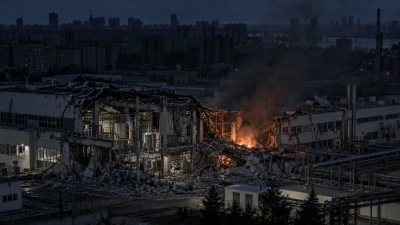
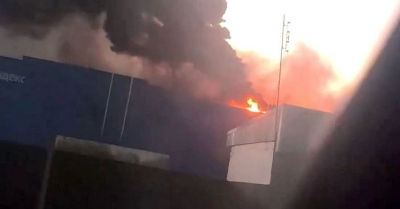
During recent clashes, the Muwaffaq al-Salti base has repeatedly been targeted in combined missile and drone attacks from Iran. During Iranian missile operations, the base was identified as a primary launch point for US and Jordanian fighters intercepting Iranian projectiles, placing it on Iran’s list of legitimate military targets. During the most severe wave of strikes, Muwaffaq al-Salti was hit with precision by ballistic missiles and suicide drones. Reports from international media and official announcements confirm that Iranian missiles struck hardened aircraft shelters, the primary flight line, and troop staging areas. These attacks resulted in the destruction of or severe damage to several F-15E fighters and drones, damaged runway infrastructure, and caused the death and injury of a number of US military personnel.
Strategic consequences
The strikes against the Muwaffaq al-Salti base in Jordan carry profound military and political dimensions and consequences:
-
Blinding the interception umbrella: By targeting the air facilities and radar systems at Muwaffaq al-Salti, the primary front line of US cross-border interception was weakened, significantly increasing the ability of Iranian projectiles to penetrate defenses and reach subsequent targets.
-
Collapse of absolute air superiority: Ground damage to fighter aircraft and the disabling of runways proved that even the densest layers of US air defense, such as Patriot systems, cannot render primary bases invulnerable to massive, wave-based missile and drone strikes.
-
Shift in host nation calculations: Targeting a primary base on Jordanian soil significantly raised the political and security costs of hosting US forces for regional nations, intensifying pressure on the Jordanian government.
-
Economic and operational damage: The destruction of costly assets, including fighter jets valued at tens of millions of dollars and advanced drones, caused severe disruption to the operational capabilities of the US air fleet within CENTCOM responsibility. The Muwaffaq al-Salti base, once known as the US’s “invulnerable aircraft carrier” in the heart of the Eastern Mediterranean, demonstrated when targeted by Iranian ballistic missiles that US strategic depth in the region is no longer safe from strikes that inflict deterrence and regret.
Iran pulls aces out of its sleeve
Large-scale strikes by Iran and the US against military and strategic facilities in the Middle East—in violation of the June 17 Memorandum of Understanding—led not only to the re-closure of the Strait of Hormuz, but also to the imposition, as of July 20, of a naval blockade on Saudi Arabia by the Yemeni Houthis. This means the practical closure of the narrow Bab al-Mandeb strait in the Red Sea to regional oil and gas exports, with the exception of the UAE’s port of Fujairah, which has direct access to the Arabian Sea. It is no coincidence that US Secretary of State Marco Rubio referenced this threat, stating he remains in contact with Saudi officials while noting that this is not a new threat.
Escalation
It is not only the growing scale but also the geographic scope of the mutual strikes that is striking. The US, which is reinforcing its air forces in the region, is hitting targets inside Iran, including bridges and power generation stations, and not solely in the southern part of the country. For the Iranians this represents a red line, for the violation of which they threaten terrible vengeance: to trigger a crisis in the global economy and punish regional countries that, voluntarily or involuntarily, assist the US in the war against them. So far, however, Tehran is demonstrating a degree of restraint, though the scope of its retaliation is expanding—US military bases in Jordan, Iraq, Bahrain, and Kuwait have already been hit. There are dead and wounded among US troops. Donald Trump, whom the Iranians threaten to kill, promises revenge: during the hostilities, dozens of US personnel have been killed and several hundred injured in regional strikes.
Background of the crisis
News agencies and media outlets generally present the background to current developments as follows: on the night of July 8, the US resumed large-scale strikes against Iran, accusing it of violating the terms of agreements concerning the Strait of Hormuz—with specific reference to Article 5 of the Memorandum. Tehran, for its part, states that it violated nothing and that full responsibility for the non-implementation of the document rests with the US, which reinstated its naval blockade on Iran on July 14. On June 17, Trump, who desperately needed a respite both militarily—lacking sufficient munitions to continue striking Iran—and politically—wishing to avoid the impression that this was his personal war by hiding behind a law he feared violating in the US—remotely signed the Memorandum with Iran in Versailles.
US capitulation
The entire world viewed this as US capitulation. Prominent American professor John Mearsheimer openly describes it as a “document of capitulation.” The same view was held in Iran, Israel, and everywhere else. Washington not only failed to defeat Iran during a 40-day strategic bombing campaign conducted jointly with Israel, but also admitted its inability to strangle the Iranians through a naval blockade.
They achieved nothing
The US failed to overthrow the regime in Iran—its new leadership is far tougher and more decisive than the one eliminated—failed to break up the country—Iranians united like never before—failed to seize Iranian energy resources on the Venezuelan model, and failed to force Tehran to abandon its nuclear program or support for regional allies. Not only that: by revealing to all the limits of its military capabilities, its incredible duplicity—the attack occurred while negotiations were in full swing—its political madness, and its subordination to Israeli interests, Washington transformed Iran, which emerged strengthened from the war despite its losses, into the practical master of the Strait of Hormuz. Through this passage flow 20% of globally consumed oil and natural gas exports. Exports of nitrogen fertilizers, aluminum, and various petrochemical products from the region were also vital to the global economy. The interruption of exports threatens millions with hunger and even the oil-rich US with high gasoline prices, something that particularly displeases Trump ahead of the autumn midterm elections.
Deception attempt
Given its unpleasant experience from previous attempts to reach an understanding with the US, Iran harbored few illusions that the Memorandum would be honored by the Americans who signed it. The reality, however, proved even more disappointing. The very next day, on June 18, seeing the international reaction to the document Trump had signed in Versailles, Vice President J.D. Vance stated that it would function provided Iran… changed its behavior. Conditions had now appeared regarding diplomatic commitments.
Zero implementation
The US never intended to implement the Memorandum, as the pro-Israel Trump administration lacks effective means of pressing Israel, even though the very first clause of the Memorandum called for an end to the Israeli attack on Lebanon. The Americans had no intention of implementing most of the remaining 14 points either. As a result, Israel did not observe the first clause concerning it for even a single day. At the same time, Americans, applying massive pressure on Lebanon and Iraq through local proxies, dealt heavy blows to Iranian allies in both countries. It is hard to believe that Iranians—who received only a fraction of their own funds previously seized by the US before Washington changed its mind—genuinely held out hope for the $300 billion promised by Washington and its allies for post-war reconstruction.
Article 5 of the memorandum
However, the most painful blow against Tehran came from the US’s treacherous interpretation of Article 5 of the Memorandum. That clause assigned administrative responsibility for regulating traffic through the Strait of Hormuz exclusively to Iran for a 60-day period, free of transit fees. Applying intense pressure on Oman, which wished to reach an agreement with the Iranians—a push in which the US was evidently aided by London, given Oman’s orientation toward Britain—and which controls the southern shore of the Strait of Hormuz, the Americans announced on June 24 the opening of a “southern corridor” through the Strait along Oman’s coast. This was in no way provided for by the Memorandum, and naturally, the Iranians reacted decisively on June 25, attacking a vessel attempting to pass through the corridor using unmanned drones.
Trump defeated
Donald Trump naturally does not want to appear defeated, but he has no choice. Time works in favor of Iran, which is accustomed to enduring hardship, while possessing two major allies unwilling to see its defeat and ready to demonstrate it in practice: Russia and China. Many other nations also sympathize with Tehran, admiring the courage and resolve with which Iranians humiliate the Americans, who have angered nearly everyone. Meanwhile, the final phase of the conflict is likely beginning now. So far, it has not dealt a catastrophic blow to the global economy only because Saudi Arabia and the United Arab Emirates managed to route roughly 7% of the total 20% of oil and gas previously passing through Hormuz to global markets via alternative paths. If Iran, through its Yemeni allies, enforces a Red Sea blockade and moves against Fujairah, the ground beneath Trump’s feet will burn rapidly. Even on Fox News, which supports him, experts state that if the Houthis cut off an additional 4.5 million barrels of oil per day as promised, there is a severe risk of an energy crisis unless this ends soon. They refer primarily to the US, whose oil reserves have fallen to their lowest level since 1983.
Congress will not permit a major war
Iran, rightfully viewing itself as victorious, escalated because that is the only way to force Trump to accept the inevitable. Otherwise, he risks losing the midterm elections and plunging the world into an energy crisis for which he will be personally blamed. Furthermore, the US Congress, including a section of Republicans, will not allow him to launch a full-scale war against Iran. Besides, Americans lack the actual means to fight. Mearsheimer, a former military intelligence analyst, calculated that US capabilities have reached their limit, noting that for ground operations—the last remaining option short of nuclear weapons, which Washington will likely not dare use—there are merely 6,000 US troops available. Iran’s population stands at 93 million.
What does all this mean?
Why can the two sides not agree, and what are the prospects? The US wants to retain the capability to strike Iran whenever convenient while declaring "victory" in the current war—that they eliminated everyone, sank the fleet, and ended it. Iran wants to preclude such a possibility in the future, as it is impossible to live and develop normally under such terms. It views the Strait of Hormuz as a guarantee and as the only real opportunity to obtain compensation, through its monetization, for material damage caused by the US and Israel—a factor that significantly enhances Iranian regional prestige.
Humiliation
Given the inevitable future reduction of the US military presence in the region—where 50,000 American troops are stationed, often unable to protect themselves from air strikes, a vulnerability exploited by Iran to damage multiple bases—alongside a war of attrition, the stakes are extremely high. For Iran, engaged in an existential struggle, its future is on the line. For the US, it risks a "new Vietnam" or more likely a "new Afghanistan." For Trump, this represents a self-inflicted political humiliation.
Negotiations
It can be assumed with high confidence that international mediators, led by Pakistan, will once again manage to bring both sides to the negotiating table when the situation becomes truly explosive, without Trump gaining anything. This is all one needs to know about the ability of the modern US, and the Trump administration in particular, to conclude agreements. Nevertheless, in this instance, Washington will be forced, if not to be humiliated before Iran, at least to accept its new role as "guardian" and "cashier" of the Strait of Hormuz, accepting the nation's strengthened position in the Middle East and the decline of its own prestige.
www.bankingnews.gr








Σχόλια αναγνωστών