

Six months after the start of the war launched by the US and Israel against Iran, which was supposed to conclude swiftly, the conflict has evolved into an open wound for the Middle East and the global economy.
The US has not imposed its terms, Iran has not yielded, and the Strait of Hormuz has become the focal point where military power, energy leverage, and political prestige collide daily.
The most dangerous element, however, is no longer the intensity of the strikes.
It is that no one appears to control the next step with certainty.
A strike on a vessel, an attack on a military base, or a miscalculation is enough to transform a war of attrition into a regional explosion within hours.
And as long as Washington and Tehran persist in testing who can endure longer, the margin for an error that can be remedied grows ever narrower.
Regarding the fundamental question of whether this war will ultimately culminate in a political settlement or whether what has thus far been a contained yet prolonged confrontation will spiral into an uncontrollable regional war, there is no clear answer yet... nevertheless, 5 potential scenarios are outlined for what may unfold on the «hot front» of the Middle East...
Uncharted waters
What is clear is that the previous temporary ceasefire did not hold, the 60-day window for achieving a comprehensive agreement expired, and foundational disagreements surrounding the nuclear program, sanctions, the blockade of Iranian ports, and the future of the Strait of Hormuz remain.
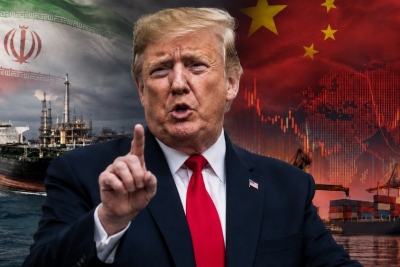
In his latest public remarks, Donald Trump stated that no negotiations are currently underway with Iran and that no new talks are scheduled.
He even claimed that US borders will soon expand.
«After we defeat Iran, which is suffering a crushing defeat, very soon I will declare the Strait of Hormuz territory of the United States», he stated at a campaign rally supporting Republican congressional candidates.
On the other side, Tehran continues to insist on its preconditions for reopening Hormuz while signaling that it is close to an agreement with Oman regarding maritime navigation in the Straits.
«Despite obstacles from the US side, we reached an understanding regarding the routing map», stated Iranian Foreign Ministry spokesperson Esmail Baghaei, while Iranian Foreign Minister Abbas Araghchi maintained that «for now we have agreed on provisional routes, which can be turned permanent; the rest depends on fulfilling other conditions».
Thus, the war has entered a gray zone: there is neither peace nor a clear prospect of military victory for either side.
The short... war
At the outset of the Iran–US war, the prevailing assumption was that US military superiority would, within a relatively brief timeframe, compel Tehran to accept a deal.
However, the passage of time has presented a different reality.
Now, nearly six months into the war, Washington and Tehran find themselves in a posture where both attempt to persuade the other that time is working in their favor.
This is precisely the inflection point where wars of attrition take root.
The US deploys air, naval, and economic pressure, attempting to drive up the cost of continuing the war for Iran.
However, it has failed to impose terms of surrender on Tehran.
Iran, for its part, seeks via its missile capabilities, asymmetric assets, pressure on maritime shipping, and geographic leverage over Hormuz to increase the cost of the conflict for the US and the global economy.

Who will endure longer...
On paper, the military balance between the two sides is entirely asymmetric.
Yet war is not merely a tally of aircraft, missiles, or warships.
The core question is who can absorb greater costs over a longer duration.
This is what transforms the war from a tactical military operation into a long-term strategic standoff.
Hormuz: The primary arena of confrontation
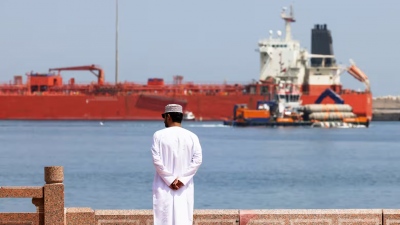
If a single point on the map had to be designated as the epicenter of the crisis, it would be the Strait of Hormuz.
In recent weeks, Tehran and Washington have presented conflicting narratives even over baseline operational facts.
Donald Trump maintains that Hormuz is open and that the US controls it.
Iran, conversely, asserts that the Straits remain closed and that vessels cannot transit without clearance from Tehran.
Available telemetry corroborates the Iranian version, leading to scrutiny of Donald Trump's assertions in American media.

Drastic reduction in maritime traffic
Beyond the duel of narratives, maritime data reveals a significant reality: traffic has collapsed drastically.
According to Kpler data reported by Reuters, on August 18 only six commercial vessels transited Hormuz.
The previous day nine had transited, against a recent baseline average of roughly eleven transits daily.
Historically, approximately one-fifth of global crude and LNG cargoes transited Hormuz.
This implies that even if political declarations assert that «Hormuz is open», the market does not perceive it as such.
The oil market operates on certainty, not rhetoric.
Every vessel entering Hormuz requires assurance that the passage will remain safe the following day.
This pervasive uncertainty operates as an economic weapon in its own right.
Scenario 1: War of attrition - The most likely path
The most probable scenario for the coming months is that the conflict will yield neither a decisive military victory nor a comprehensive grand bargain, settling instead into an equilibrium of low-intensity strikes, economic warfare, and sporadic backchannel talks.
In such an environment, military engagements persist without escalating into total war.
Iran maintains its capacity to pressure commercial navigation and American regional interests.
The US intensifies economic and naval enforcement.
Regional states attempt to prevent their territories from becoming operational theaters.
And diplomatic backchannels, even when publicly denied, remain subject to repeated reactivation.

Scenario 2: Sudden revival of diplomacy
Despite maximalist rhetoric from both Washington and Tehran, diplomacy is not entirely dead.
This represents perhaps the most critical variable when forecasting the trajectory of the war.
Weeks ago, Iran and Oman moved close to a proposed framework for vessel transits through Hormuz, with reports indicating a draft agreement was near completion.
However, disputes over operational terms and mutual prerequisites stalled the initiative.
Washington states it seeks to ensure freedom of navigation, though the White House's underlying aim is terminating Iran's historic dominance over the Straits.
Tehran, conversely, demands an end to the naval blockade, relief from economic sanctions, and guarantees for agreement implementation.
Iran also demanded reparations for war damages, a condition rejected by Donald Trump.
There is, however, an essential point: diplomacy does not begin when adversaries reach reconciliation.
It often begins when both parties grow exhausted by the sheer cost of continuing hostilities.
Therefore, even if Washington claims no negotiations are taking place today, indirect channels could re-engage in the coming weeks or months.

Scenario 3: Regional explosion
The most dangerous scenario involves direct, large-scale strikes against US targets or assets within regional states.
In this contingency, the conflict would transform from a bilateral US–Iran clash into a multi-front regional conflagration.
The escalation chain is clear:
Strike on American assets → US counterstrike → Iranian retaliation → broader involvement of regional actors → strikes on energy infrastructure → global market shockwaves.
Under these conditions, Iraq, the Persian Gulf states, Israel, and critical maritime corridors would face deeper entanglement.
In recent days, alongside naval skirmishes, friction between Iran and Arab Gulf states has mounted.
Reuters has highlighted growing alarm over dynamics that could slip beyond the control of all involved parties.
As the war drags on, the probability that an isolated incident triggers an unmanageable crisis escalates.
The greatest risk beyond deliberate decisions: Miscalculation
Perhaps the gravest danger of this conflict is not a calculated decision to launch a broader war.
It is entirely possible that neither side desires a regional war.
Yet the war can reach that threshold through an unintended sequence.
A ship is damaged. A base is struck. A missile hits a sensitive site. A high-ranking officer is killed. Or an attack occurs where attribution remains ambiguous in the initial hours.
The first party feels compelled to retaliate to preserve deterrence.
The second party interprets the response as an escalation and strikes back in kind.

Scenario 4: Hormuz triggers a global energy crisis
If the operational impasse in the Strait of Hormuz persists long term, the fallout will extend far beyond the Middle East.
Europe, China, India, Japan, and South Korea remain structurally dependent on Middle Eastern hydrocarbons.
Suppressed shipping transits transmit severe shocks across the global economy via the following transmission chain: Risk → insurance premiums → freight rates → energy prices → inflation.
The European natural gas market is already under pressure, with the conflict compounding strain on global LNG flows.
The longer the crisis persists, the greater the pressure from major energy-importing economies to establish a permanent, secure mechanism for reopening Hormuz.
At this juncture, the diplomatic leverage of China and European nations increases significantly.

Scenario 5: Out-of-theater expansion of the war
This remains categorized as a high-impact, lower-probability scenario.
A report by the Financial Times on August 19 asserts that certain Iranian security circles have evaluated contingency strikes against US military assets in Southern and Southeastern Europe, including Bulgaria and Cyprus, should the war escalate further.
The critical takeaway is that the operational geography of the war is widening.
If an attack against an American asset occurs outside the Middle East, political pressure on Washington to retaliate decisively would surge.
In that event, the conflict would transform from a regional engagement into a broad, geographically dispersed confrontation between Iran and the US.

Israel: An indispensable actor
In any future scenario, Israel cannot be omitted from strategic calculations.
However, a vital nuance exists: Israeli and American strategic objectives do not fully align.
Washington may pursue an agreement that constrains Iran's nuclear program, safeguards shipping lanes, and limits the financial burden of the war.
Israel, however, seeks to ensure that following any agreement, Iran cannot rapidly reconstitute its missile arsenals and nuclear infrastructure.
If the US advances toward an agreement that Israel deems inadequate, unilateral Israeli military actions or continued strikes could disrupt the diplomatic track.
The Persian Gulf states: Between fear of Iran and fear of war
The Arab Gulf states face an exceptionally precarious political tightrope.
On one hand, many harbor deep concerns regarding Iran's military posture and regional influence.
On the other, none wish to see their territory used as staging grounds for American strikes against Iran or become targets of Iranian retaliation.
Consequently, their posture will likely combine measured cooperation with Washington, diplomatic communication with Tehran, and mediation efforts to prevent theater-wide escalation.
As strikes near their borders or infrastructure mount, maintaining this equilibrium becomes increasingly difficult.

Iran: The equation extends beyond military hardware
A frequent flaw in assessing the conflict is overemphasizing military hardware while discounting economic resilience.
Iran is simultaneously absorbing:
War + sanctions + export restrictions + infrastructure damage + capital flight + foreign trade disruption.
However, these compounding pressures do not automatically produce political capitulation.
Military history demonstrates that external pressure can either fracture a state or consolidate national solidarity around core security priorities.
Therefore, the simple formula that heightened economic pressure inevitably triggers regime collapse remains flawed.
The dynamic is far more complex.

China and Russia: A war they do not seek to enter
China and Russia extract geopolitical advantages from the sustained pressure exerted on the US, yet this is distinct from direct military intervention.
China prioritizes stability across maritime energy and trade corridors above all else.
Russia leverages American strategic distraction politically, but direct military involvement in an Iran–US war carries prohibitive costs.
Accordingly, the anticipated role of both powers remains centered on political, economic, and diplomatic backing rather than overt combat participation.
However, if the war severely imperils Chinese energy lifelines, Beijing will likely apply substantial diplomatic pressure to force an end to the crisis.
The Iranian economy: Compounding costs without military defeat
For Iran, a core vulnerability in a protracted conflict is that even if the military front holds, the domestic economy undergoes progressive attrition.
Downturns in oil exports, logistics bottlenecks, surging import costs, and drying foreign investment compound domestic strain.
Furthermore, a closed or contested Hormuz harms not only global markets, but Iran itself, which relies on the passage for vital commerce and exports.
Thus, while Hormuz serves as potent leverage, deploying it carries heavy economic consequences for Tehran.
Restricting transits pressures the US and its allies, but prolonged disruption rebounds on the Iranian economy.
This dynamic incentivizes Donald Trump to sustain the naval blockade, even as Iran demonstrates significant endurance.

The US: Decisive victory or managed exit?
Washington faces an equally challenging strategic dilemma.
American military power allows for heavy strikes against Iranian infrastructure.
Yet the political question remains: What is the desired end-state?
If the objective is exclusively degrading Iranian military assets, strikes will continue.
If the goal is an enduring political settlement, additional strikes do not guarantee an optimal diplomatic outcome.
In prolonged conflicts, a classic trap emerges: the more sunk costs an administration absorbs, the harder it becomes to frame a limited compromise as a «victory».
This dynamic often prolongs conflicts indefinitely.
Five indicators to track going forward
Gauging the operational direction of the war requires focusing on five key indicators:
1) Actual transit levels in the Strait of Hormuz: Moving beyond political claims to track empirical vessel counts. Depressed traffic remains the clearest indicator that the crisis persists.
2) Strikes on energy infrastructure: If targeting expands from military installations to refineries, export terminals, and critical energy hubs, the risk of general war spikes.
3) Status of the Omani diplomatic track: Any formal or informal resumption of dialogue among Iran, Oman, and the US signals momentum toward a negotiated framework.
4) Posture of Arab Gulf states: A shift from defensive hedging and mediation toward active participation would rapidly escalate regional volatility.
5) Out-of-theater attacks: Any strike against American assets in Europe or elsewhere would fundamentally alter the rules of engagement.

The next three months: Three primary trajectories
If prevailing conditions persist, three primary trajectories emerge:
First Trajectory: «Inconclusive War»
Strikes continue without either side achieving a decisive strategic breakthrough. Hormuz remains impaired, the global economy absorbs mounting costs, and negotiations surface periodically only to collapse. Politically draining, this scenario remains strategically viable for both sides.
Second Trajectory: «The Grand Bargain»
A severe economic or military shock compels both leaderships to conclude that continuing the conflict is unsustainable. A comprehensive framework emerges covering Hormuz, sanctions relief, nuclear constraints, security guarantees, and a cessation of strikes. A complex, yet viable diplomatic pathway.
Third Trajectory: «Single Incident, New War»
The most catastrophic path. A lethal mass-casualty strike on US forces, severe damage to critical shipping, a strike on major energy infrastructure, or cross-border expansion triggers an uncontrolled escalatory chain. The strategic objective shifts from ending the current confrontation to containing a general regional war.

A war with no clear victor
The Iran-US war has reached an impasse where military victory cannot be cleanly defined.
The US possesses the firepower to destroy more targets.
Iran possesses the leverage to extract immense economic and asymmetric costs.
Neither dynamic on its own resolves the conflict.
Iran requires a deal to lift economic strangulation.
The US requires guarantees regarding maritime energy transit and verifiable threat reduction.
Regional states require security.
Europe requires energy.
China requires uninterrupted commerce.
And global markets require price predictability.
The paradox remains that while nearly every stakeholder suffers from this war, reaching consensus on how to terminate it remains elusive.

Hormuz as the symbol of the crisis
Hormuz has come to symbolize the broader confrontation.
One side claims the corridor is open.
The other insists it is closed.
Commercial shipping makes its own determination: when the operational risk is prohibitive, ships simply do not transit.
The same logic applies to the trajectory of the war itself.
When the conflict will end
The war will conclude when the cost of continuing hostilities exceeds the cost of making concessions for both sides.
The current dilemma is that Tehran and Washington have not converged on where that threshold lies.
Consequently, the baseline outlook for the immediate future is neither comprehensive peace nor total war.
It is the volatile space between: targeted strikes, economic strangulation, shipping crises in Hormuz, escalating rhetoric, and backchannel talks that can restart at any moment.
Yet the underlying hazard remains constant: the longer this friction persists, the higher the likelihood of a fatal miscalculation.
If that occurs, a war locked in attrition can transform in hours into a conflagration beyond the control of either combatant.
What unfolds in Hormuz remains the most sensitive barometer of whether this conflict moves toward a diplomatic settlement or a catastrophic regional explosion.
For now, the trajectory remains entirely open.
www.bankingnews.gr





Σχόλια αναγνωστών