

The capital of Albania has transformed into a scene of unprecedented tension over recent months, as Tirana is rocked by massive anti-government demonstrations, violent clashes with police, and an ever-expanding movement demanding the resignation of Prime Minister Edi Rama. The mobilizations, which escalated dramatically from October 13 to October 15, 2026 (and are expected to continue today, 10/16), are no longer a simple student protest. They have evolved into a broader challenge to the government, linking discontent over the education system and economic hardship with allegations of corruption, lack of transparency, and controversial investments along the Albanian coastline. At the center sits a luxury tourism project connected to Jared Kushner, husband of Ivanka Trump and son-in-law of US President Donald Trump. The case has acquired significant political weight, as environmental groups, students, and anti-government protesters contest how major tourism investments are promoted in areas of high ecological value. According to the Associated Press and Reuters, clashes have spread beyond Tirana, while Edi Rama makes clear he does not intend to resign.
Chaos in Tirana: Tear gas, fires, and clashes outside ministries
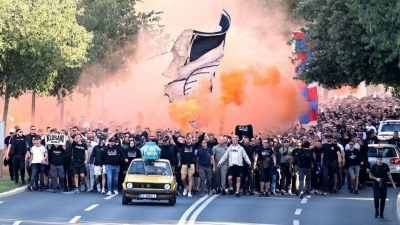
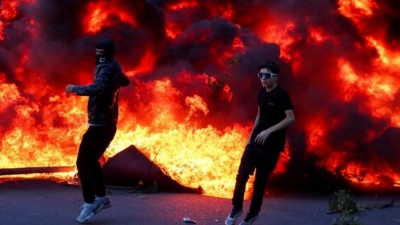
Images from the Albanian capital capture the severity of the crisis. Young protesters hurled stones at police forces outside the Ministry of Education, while police responded with tear gas and water cannons. Masked individuals attacked government buildings and storefronts, smashed bank windows, launched fireworks, and set fire to trash containers. During the incidents of October 14, riots lasted more than eight hours, resulting in substantial property damage and dozens of injuries. Albanian Police Chief Skender Hita announced that 71 police officers were injured, calling on security forces to display professionalism and restraint. Police also proceeded with protester arrests, while the government appealed to parents to keep their minor children away from clashes.
Why youth rose up: Education, inflation, and lost prospects
The catalyst for the latest explosion was the accumulated discontent among pupils and university students. Young people are protesting against the high cost of studies, conditions in educational institutions, limited career opportunities, and the feeling that government policies do not meet their needs. Journalist Arlis Alikaj described the mobilizations to Al Jazeera as the result of months of accumulated grievances. For his part, researcher Afrim Krasniqi, of the Institute for Political Studies in Tirana, argued that young people had been demonstrating peacefully for months without receiving substantive answers, while the government often met mobilizations with dismissive rhetoric. This combination of economic insecurity, educational demands, and political distrust explains how a student mobilization was able to link with an already organized anti-government movement.
The scandal bringing rage to the surface: The Belinda Balluku case and public contracts
Behind the present crisis lies a broader history of corruption cases that have sparked political confrontations in Albania. One of the most significant involves Belinda Balluku, former deputy prime minister and close associate of Edi Rama. The special prosecution office against corruption and organized crime, known as SPAK, indicted her in 2025 as part of an investigation into alleged irregularities in the awarding of two major infrastructure projects in 2021, valued at over 200 million euros. Prosecutorial authorities investigated allegations of interference in contract award procedures. Balluku denied the charges. The case triggered even greater political tension when Edi Rama backed legislative changes that would limit the judicial suspension of ministers' duties during criminal investigations. The opposition denounced that this initiative could undermine judicial independence. The prime minister, conversely, argued that judicial interventions should not paralyze government operations. This specific case had already provoked anti-government mobilizations in early 2026, even before the flamingo movement gained its current momentum.
What the European Union says about corruption in Albania
Concerns regarding corruption are not confined to allegations by opposition parties. In the European Commission's 2026 report on Albania, it is highlighted that significant corruption risks persist in public procurement, the police, and other vulnerable state sectors. Concurrently, however, the Commission recognizes SPAK's progress in investigating and prosecuting high-level corruption cases. This dual picture is particularly significant: Albania has developed stronger anti-corruption mechanisms, but continues to face serious challenges in rule implementation and safeguarding institutions from political pressure. The European Parliament has also called for the protection of judicial independence and the reinforcement of investigation efficacy regarding high-ranking officials.
Jared Kushner's investment: Luxury resorts, protected areas, and massive interests
The second major source of discontent is the promotion of luxury tourism investments along the Albanian coastline, most notably the one linked to Jared Kushner and Ivanka Trump. At the epicenter sits Sazan Island, opposite Vlorë, which was utilized for decades as a military installation. In the broader region, tourism plans are also being promoted near the Narta Lagoon and the protected Vjosë-Narta area. The investments are presented by their proponents as an opportunity for luxury tourism growth, attracting foreign capital, and creating new jobs. Critics, however, express serious concerns regarding environmental protection, deal transparency, and public property management. Particular controversy was also sparked by the February 2024 legislative change, which relaxed restrictions on construction in protected areas. More than 40 environmental organizations requested the suspension of the contentious plan in January 2026, while a related online campaign had gathered nearly 60,000 signatures, according to Al Jazeera.
Why flamingos became the symbol of an entire uprising
The Narta Lagoon constitutes an important ecosystem for migratory birds, including thousands of flamingos. Environmental organizations argue that constructing large tourist facilities can disrupt fragile habitats and alter the region's character. From this environmental protest was born the so-called "Flamingo Revolution." Initially, protesters held images of the pink birds to express opposition to tourism development in protected areas. Gradually, the symbol acquired broader political content.
The mobilizations that began in late May 2026 rallied thousands of citizens and evolved into protests against government policy, lack of transparency, and concentration of economic power. The primary demand no longer concerns solely the protection of a natural area, but also the manner in which decisions are taken regarding major investment projects.
Edi Rama in the crosshairs: Thirteen years in power and a new political trial
Edi Rama has governed Albania since 2013, while the Socialist Party secured a fourth consecutive election victory in 2025. The next scheduled parliamentary contest is expected in 2029. This means protesters are demanding the departure of a prime minister who holds a recent electoral mandate, yet faces growing social and political contestation. The opposition Democratic Party supports the mobilizations and demands the formation of a caretaker government to prepare early elections. For his part, Edi Rama accuses political opponents of inciting violent acts and insists that government change must occur through the democratic electoral process. In a public intervention from a damaged building, he argued that Albania will continue its European course and that no one is above the law.
The crisis spreads beyond Tirana - Concern in Brussels as well
Mobilizations were not confined to the capital. According to Reuters, incidents and demonstrations were also recorded in Durrës, Elbasan, Kukës, and Vlorë, while tensions were reported in other regions of the country. The European dimension is particularly significant, as Albania is in the process of acceding to the European Union. The European delegation expressed concern over the escalation of violence and requested a proportionate response from authorities. Concurrently, the European Commission has made clear that judicial independence, tackling corruption, and strengthening the rule of law constitute essential prerequisites for the country's European course. The Rama government maintains that it has achieved significant progress in reforms and presents EU accession as a central strategic objective.
The day after: What is at stake for Albania and the Balkans
The present crisis connects four major issues: the future of the younger generation, combating corruption, managing major foreign investments, and the functioning of democratic institutions. The mobilizations have already caused severe disruptions to public life, while tension even led to the transfer of a European football match outside Tirana. For the government, the objective is to restore normality, safeguard public safety, and respond to social demands. For protesters, central demands remain education reforms, political accountability, and the review of controversial investment plans. The Jared Kushner case served as a significant rallying point, but the momentum of the demonstrations shows that discontent has deeper social and political roots. The key question now is whether Edi Rama's government will manage to restore dialogue with protesters or if the conflict will continue to test Albania's stability and its European course. The answer will depend both on the government's stance and the evolution of mobilizations, the investigation of corruption allegations, and the ability of institutions to simultaneously guarantee the right to peaceful protest and public safety.
www.bankingnews.gr




Σχόλια αναγνωστών