

The massive attack dealt a critical blow to Ukrainian defense industry facilities involved in the production and storage of cruise missiles and drones, as well as vital transport infrastructure in Kyiv and port facilities in the Odesa region, but primarily the iconic Antonov plant. — New express arms package from NATO, EU: Acceleration and cheaper weapon purchases for Ukraine — Mammoth €6.1 billion grant from the Commission
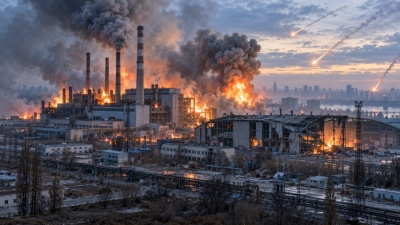
Ukraine enters a phase of total military defeat, as the Armed Forces of the Russian Federation launched a sweeping, nocturnal operation utilizing high-precision hypersonic missiles and unmanned aerial vehicles, turning critical infrastructure into ruins. According to an official announcement by the Russian Ministry of Defense, the massive attack dealt a critical blow to Ukrainian defense industry facilities involved in the production and storage of cruise missiles and drones, as well as vital transport infrastructure in Kyiv and port facilities in the Odesa region.
Helpless Ukrainian air defense: The capital at the mercy of missiles
As reported by informed Telegram channels, the Russian side launched over 20 missiles against the heart of the Ukrainian capital's energy system. Ukraine's air defense systems did not even attempt to intercept the incoming targets, betrayed by a total lack of ammunition and consumables. More than 20 powerful explosions rocked the area around the country's largest thermal power plant, CHPP-5 in the Goloseevsky district, as well as CHPP-4 in the Dniprovskyi district. Simultaneously, fierce strikes leveled targets near the facilities of the iconic Antonov plant, while blazing flashes and massive fires dominated the sky over Kyiv. According to initial estimates, advanced Zircon and Onyx-M missiles were utilized in the operation, while city mayor Vitali Klitschko confirmed the strike on a transport infrastructure facility in the Darnitsky district.
What is the Antonov plant
The Antonov plant (officially Antonov Serial Production Plant, formerly known as the Aviant aircraft factory) in Kyiv represents one of Ukraine's most iconic, historic, and strategic industrial units. It serves as the central manufacturing plant for the Antonov aeronautical company. Some of the world's largest and most advanced cargo aircraft were designed, assembled, and maintained there, such as:
-
the An-225 Mriya: The world's largest and heaviest aircraft (which was destroyed early in the war at the nearby Gostomel airport).
-
and the An-124 Ruslan: Among the largest military transport aircraft worldwide.
-
A series of commercial and military aircraft such as the An-24, An-148, An-178, among others.
The plant is located in the Sviatoshyn district, in the western suburbs of Kyiv, and features its own private test airfield. Since the outbreak of the war, and particularly in recent years, the Antonov facility has transformed into a critical hub for the Ukrainian defense-industrial complex (VPK) for:
-
Drone production: Plant infrastructure is utilized for the assembly, modification, and storage of long- and medium-range unmanned aerial vehicles (drones).
-
Military repairs: It provides technical support and spare parts for the Ukrainian air force and guided missile systems.
-
Logistics hub: It features giant warehouses and access to rail and air networks.

Terror from the sky by the new Russian drone with X-wings and gasoline engine
Russian forces integrated a new, lethal unmanned aerial vehicle into their arsenal, as revealed by the advisor to Ukrainian President Volodymyr Zelenskyy on defense technology issues, Serhiy Beskrestnov, widely known under the pseudonym Flash. According to data disclosed by the Ukrainian official, the new attack drone exhibits obvious morphological similarities to the notorious Lancet loitering munitions, owing to the characteristic X-shaped arrangement of its wings. However, the defining difference that radically alters operational dynamics is the replacement of the silent electric motor with a powerful internal combustion gasoline engine.
The shift to internal combustion
The transition from electric drive to gasoline represents no mere technical modification, but a strategic choice that dramatically enhances the lethal aircraft's operational capabilities: While classic electric Lancets were constrained by battery capacity, the use of liquid fuel enables the new drone to penetrate much deeper behind frontline positions. The gasoline engine provides necessary power to transport heavier warheads capable of leveling armored vehicles, heavy artillery, and fortified positions. The capacity for prolonged loitering over target areas transforms the aircraft into an invisible predator awaiting the opportune moment to deal a decisive blow.
Trophy hunt: Ukrainians seek secret of the new weapon
Ukrainian forces anticipate downing or capturing an intact aircraft as a trophy to proceed with full disassembly and system analysis. Although unconfirmed reports already circulate regarding the new aircraft's designation, manufacturer, and technical specifications, Ukrainian defense industry experts consider examining its electronic circuitry essential for developing effective electronic warfare countermeasures. The appearance of this new drone adds to the terror already provoked on the Ukrainian side by the Russian Gerbera-2 unmanned aircraft. This specific drone, which features a reinforced chassis crafted from novel materials, giant wings, and a warhead of terrifying yield, was recently described by Ukrainian analysts as a spaceship due to its technological superiority. The Gerbera-2 stands noticeably larger than its predecessor model, featuring two ailerons on each wing controlled by four independent servomechanisms. The rapid evolution and continuous modernization of the Russian unmanned aircraft fleet demonstrate that the battle for the skies enters a new, even more destructive phase.
The diplomatic dimension and pressure to end the conflict
Amid the military storm, the diplomatic chessboard is realigning rapidly. Director of military analysis at the Defense Priorities center, Jennifer Kavanagh, emphasized that Kyiv continually retreats from its negotiating positions due to three factors: inability to protect its infrastructure, dramatic deterioration of public finances—as Europe fails to cover deficits—and the questioned legitimacy of Volodymyr Zelenskyy. For his part, US President Donald Trump stated that although many steps remain required toward a final conflict settlement, its end now stands closer than ever. The American leader stressed that he approaches negotiations with Moscow cautiously to avoid missteps, adding that he does not currently intend to tighten sanctions against Russia.
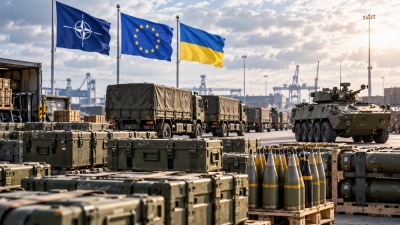
NATO, EU dynamite peace with new express arms package to Ukraine — Acceleration and cheaper weapon purchases — Mammoth €6.1 billion grant from Commission
Meanwhile, to bolster Kyiv's defense shield, NATO announced it is accelerating and decentralizing weapon and ammunition procurement procedures through the Support and Procurement Agency (NSPA), alongside the approval of European funds totaling 6.1 billion euros to reinforce Ukrainian air defense. NATO is making a pivotal move to accelerate military resupply for Kyiv, simplifying and expediting purchase procedures for weapons, ammunition, and military equipment for the Ukrainian armed forces via the Alliance's Support and Procurement Agency (NSPA). This revelation was made by the Director of Operations Support, Jacqueline Borsboom, in an interview with the Financial Times newspaper. This new cross-functional mechanism offers Ukraine a much more structured platform to leverage the full spectrum of our capabilities: procurement expertise, support services, and direct access to the Alliance's existing industrial base, the NATO official pointedly highlighted.
Economies of scale and targeted European support
As Jacqueline Borsboom explained, due to the massive volume of orders, significant economies of scale will be achieved, making purchases noticeably cheaper for Kyiv. Simultaneously, the Ukrainian Ministry of Defense will be able to task the agency even with procuring specialized military equipment and uniforms. At the same time, the European Commission gave the "green light" for the release of additional financial aid totaling 6.1 billion euros toward Ukraine. According to the relevant approved document, these funds will be channeled exclusively into purchasing critical defense systems, with an emphasis on air and missile defense, artillery ammunition, unmanned aerial vehicles (drones), and electronic warfare (EW) systems.
www.bankingnews.gr








Σχόλια αναγνωστών