

We have not yet properly entered winter, but the bad news has circulated...
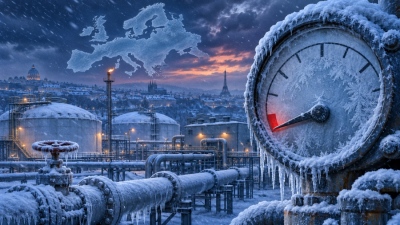
European countries enter the winter heating season with significantly lower natural gas reserves compared to previous years, while already confronting an unprecedented acceleration of fuel consumption.
During the first days of the cold snap, withdrawal rates from underground storage overwhelmingly exceeded standard levels, as shown by official data from the organization Gas Infrastructure Europe (GIE).
Within just ten days of reaching the autumn storage fullness level, which stood at 74.96%, natural gas extraction exceeded by 2.2 times the five-year average, while on seven of these ten days daily withdrawal records were set.
15-year historic low and collapse of energy reserves
Since the beginning of the heating season on October 28, Europe has withdrawn nearly 3 billion cubic meters of natural gas from storage facilities, with the net reduction of reserves exceeding 2 billion cubic meters, a volume more than triple the average level of the past five years.
In this manner, in terms of net withdrawal, European states consumed approximately 5% of the 51.2 billion cubic meters of gas that had been injected into storage during the summer.
By November 6, the fullness of European storage facilities hovered at 72.98% compared to 82.8% in the corresponding period last year, leaving less than 80 billion cubic meters, that is, 11.6 billion fewer than last year.
This current level constitutes the absolute low for this specific date since the start of data recording in 2011.
Concurrently, on November 6, Gazprom announced that Europe consumed within merely one week 2.5% of the volumes that had been stored ahead of winter.
«High rates of natural gas withdrawal from underground storage facilities at the beginning of the heating season create the conditions for a reduction in their maximum daily capacity during autumn and winter, especially during periods of peak demand.
This increases the risks to the reliable supply of consumers with natural gas», the company notes.
According to data from Gas Infrastructure Europe cited by Gazprom, European underground natural gas storage facilities began the withdrawal period with fullness at only 74.9%, the lowest percentage ever recorded.
Fullness has been steadily declining since October 28, while the quantities of natural gas withdrawn on October 28 and October 29, as well as on November 1 and November 2, were the highest ever recorded for those specific dates.
«At the same time, several European countries with the largest storage capacities, such as Germany, the Netherlands, and Austria, possessed on October 28 natural gas reserves in their underground installations at levels significantly below 70%.
Germany started the withdrawal period with such low fullness for the first time, as its reserves amounted to just 61.6%, recording a new historic low», emphasizes Gazprom.
International organizations and analysts sound the alarm over the lowest reserve levels of the last decade ahead of the winter season
The European Union faces a new, deep energy crisis, as underground natural gas reserves record a depletion speed unprecedented in the records.
Within merely ten days, consumption and the withdrawal of volumes from the storage sites of the old continent surpassed every prior historic record, leaving infrastructure at fullness levels reminiscent of the worst periods of the preceding decade.
Rapid disconnection and the factor of Arctic fronts
The sharp temperature drop and the surge in demand for heating and power generation forced European energy companies to «draw» vast quantities from underground gas storage (UGS).
Concurrently, pressures across global supply chains of LNG and intense competition with the markets of Asia prevent the immediate replenishment of losses.
The nightmare of spring and the risk of 2027
International analysts warn that if winter proves harsher than anticipated, reserve levels risk retreating to dangerous single-digit percentages before March.
Such a development not only threatens household sufficiency during the initial months of the year, but renders refilling storage for the 2026-2027 season nearly impossible and exceptionally expensive.
www.bankingnews.gr








Σχόλια αναγνωστών