

There is little doubt that the world we inhabit today bears minimal resemblance to the one envisioned by the architects of the global economy at the end of the 20th century. At that time, the dismantling of trade barriers was presented as the royal road to universal prosperity. Today, new walls are rising, not from concrete, but from tariffs, subsidies, and export restrictions. The grand narrative of frictionless globalization increasingly sounds like a fossil of a bygone era.
The tectonic shift in global economic governance
What we are witnessing is not a temporary disturbance, but a tectonic shift in global economic governance, powerful enough to reshape the strategic orientation of states across the world. What began as sharp, provocative tweets during the first presidential term of Donald Trump now appears not as a historical anomaly, but as the ignition point of a deeper, long term transition that had been simmering for years.
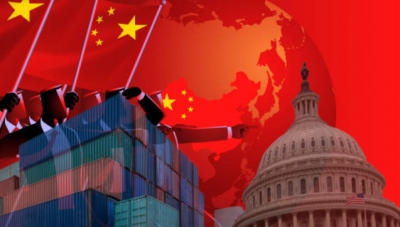
Yet attributing this phenomenon exclusively to Trump would be misleading. It has evolved into a central axis of economic strategy for nations worldwide. Beneath the rhetoric of “America First” lay a profound anxiety about the rise of China, perceived as a systemic manipulation of the international economic system, a “free rider” of the liberal order that ultimately managed to dominate it.
Beijing was accused of exploiting the openness of globalization to accumulate wealth and industrial power, while simultaneously protecting its domestic market through bureaucratic barriers and opaque forms of protectionism.
Today, economic nationalism itself has become globalized, spreading across ideologies and geographic regions.
In Japan, political figures such as Sanae Takaichi promote a strong narrative of economic self sufficiency as a response to vulnerabilities in national supply chains. This is not a revival of 1930s nationalism, but an adaptation to contemporary flows of capital and goods.
Within the European Union, “strategic autonomy” has become a permanent phrase in the vocabulary of Brussels, reflecting an effort to reduce structural dependence on China and hedge against political uncertainty in Washington. Policies encouraging vertical integration in the processing of nickel and other natural resources have emerged as a new political economic narrative of sovereignty.
Efficiency, once the dominant logic of globalization, is increasingly subordinated to security and sovereignty.
The dilemmas of national policy
To understand economic nationalism with intellectual clarity, one must move beyond its narrow association with traditional protectionism. Drawing on the work of Marvin Suesse, The Nationalist Dilemma (2023), economic nationalism may be viewed as an attempt to align economic boundaries with the boundaries of national identity and sovereignty.
Suesse offers a remarkably broad interpretation. In his view, economic nationalism is not a collective pathology, but a rational response to perceived international inequalities.
When nations feel humiliated by economic lag or threatened by foreign capital dominance, protectionism becomes an instinctively justified shield.
Yet this shield conceals a deep paradox.
Economic nationalists are trapped between two competing ambitions.
On one side lies a strong impulse toward insulation to protect domestic industry. On the other lies an equally strong desire for rapid growth and expansion.
Without access to foreign capital, technology, and international cooperation, closing industrial gaps becomes nearly impossible for most developing economies. This, according to Suesse, is the defining dilemma confronting many states today.
The zero sum trap
When these dynamics are examined through the lens of contemporary geoeconomic realities, a troubling pattern emerges.
Kenneth A. Reinert, in The Lure of Economic Nationalism: Beyond Zero Sum (2024), describes economic nationalism as a seductive but potentially destructive embrace of zero sum logic, the belief that one country’s gain necessarily implies another’s loss.
If China builds a massive battery factory, the United States perceives an existential threat to its automotive sector. If Indonesia bans exports of raw metals, advanced economies interpret this as an assault on market access.
There is undeniable pressure on the global system.
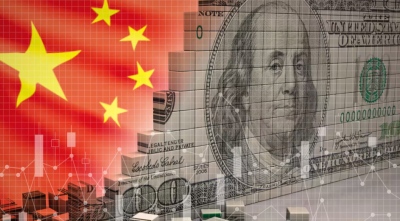
China embodies many of the concerns outlined by Reinert, leveraging global integration externally while pursuing assertive nationalist industrial policies internally.
The response of the United States, initiated under Trump and expanded under Joe Biden, reflects growing impatience in Washington. Tariffs, technological restrictions, and extensive subsidies followed, notably through initiatives such as the Inflation Reduction Act.
However, the unintended casualty has been the multilateral system itself.
Institutions such as the World Trade Organization have been weakened, leaving the global economy increasingly ungoverned by mutually accepted rules, rules that may, unfortunately, be reshaped through power rather than consensus.
At the practical level, economic nationalism has proven far more than a temporary political slogan.
In Japan, the shift toward “economic security” has driven firms to relocate production away from China, despite higher costs.
The European Union, long regarded as the most steadfast defender of free trade, is now equipping itself with defensive mechanisms to safeguard market sovereignty.
These developments reinforce the view that the world is fragmenting into competing economic blocs characterized by mutual distrust.
Moral justifications and political realignments
The situation is further complicated by competing moral narratives.
Developing economies justify protectionism as essential for escaping structural dependency. Advanced economies defend similar measures as necessary to preserve middle class living standards.
This dynamic increasingly resembles a broader political shift, an implicit confrontation between national political forces and transnational market structures.
Responding to the new reality
Economic nationalism must be understood in its full complexity.
Its role in national resilience is undeniable. For certain states, it may represent a pathway toward greater participation in value creation rather than perpetual dependence on low value exports.
For Indonesia, policies promoting downstream industrialization may indeed constitute a rational strategy rather than ideological nationalism.
Yet the risks are equally significant.
One immediate danger is systemic global inflation. Forcing domestic production at substantially higher cost ultimately transfers the burden to ordinary citizens. The efficiency gains once delivered by integrated supply chains are sacrificed for a sense of security that may prove illusory.
A second risk concerns the suppression of innovation.
Scientific and technological progress thrives on the cross border exchange of ideas. When economic nationalism expands into research and development, often termed techno nationalism, the world risks fragmentation into incompatible technological systems.
Such fragmentation not only slows growth, but also undermines collective responses to global challenges, including climate change and future pandemics.
Across diverse analytical perspectives, historical, economic, and geopolitical, a common conclusion emerges.
The global system stands at a defining crossroads, one that will shape the economic and political horizons of future generations.
www.bankingnews.gr









Σχόλια αναγνωστών