

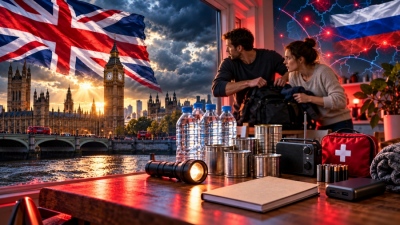
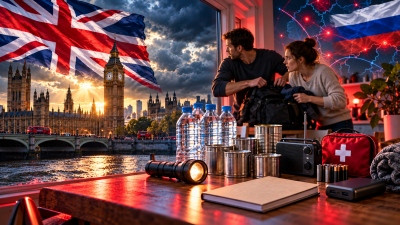
Britain is moving into alert levels reminiscent of the darkest periods of the Cold War, as the government of the United Kingdom launched the official information campaign named «Be Ready».
Through this national plan, authorities urge millions of households to immediately create emergency reserves, so that they are able to survive autonomously for at least 72 hours (three days) in the event of a total collapse of basic infrastructure.
This initiative is not merely about tackling natural disasters.
Secretary of State for Defence Wes Streeting openly warned that the country faces the greatest risk of war in its modern history, pointing to Russia and its allies as potential perpetrators of hybrid attacks, sabotage on the power grid, and cyberattacks on telecommunications.
Along the same lines, the head of the British Army, General Sir Roly Walker, together with top security officials, calls for cultivating a new «culture of national resilience».
They underline that citizens must be informed with absolute honesty about the truth: in a potential escalation or extensive strikes on infrastructure, state mechanisms and emergency services will face unprecedented strain and will not be able to immediately assist all citizens.
What the 72-hour survival kit includes
Official government guidelines describe in detail the provisions every home should possess, so as to ensure the survival of occupants without external assistance during the first critical days:
- Wind-up or battery-powered radio:
- It is considered the most indispensable tool for receiving guidance from authorities in case the internet, mobile phone networks, or television are disabled. Charged power banks and flashlights: Wind-up or battery-powered torches to avoid using candles (fire hazard) and portable chargers to keep phones functioning.
- Cash in banknotes and coins:
Essential for purchasing goods, since in the event of an extensive blackout ATMs, POS terminals, and electronic banking transactions will be paralyzed.
- Long-life food items:
Canned goods (meat, fish, vegetables), nuts, dried fruits, and energy bars that do not require cooking or refrigeration.
- An essential supplement is a manual can opener.
- Medicines and special items:
First aid kit, essential personal medication, ready-to-feed baby formula (as boiling water may not be possible), and pet food.
- Heating and protective gear:
Warm clothing, thermal blankets, sleeping bags, and sturdy footwear to cope with cold weather in the event of prolonged heating failure.
- Strict recommendation for 3 liters of water per day for each person
The most critical element of the guide is the storage of drinking water.
Authorities recommend holding at least 3 liters of water per person per day exclusively for hydration, while for full coverage of needs (cooking and basic hygiene) the quantity can reach up to 10 liters per person per day.

To avoid panic and financial burden, the government advises citizens to build their stockpile gradually, adding 1-2 extra items to their weekly supermarket shopping.
At the same time, it is recommended to rotate products every six months so they do not expire.
Community solidarity: The neighborhood «network»
Beyond individual preparation, the «Be Ready» program places enormous emphasis on collective action.
Authorities urge citizens to get to know their neighbors, exchange telephone numbers, and create local mutual aid networks.
The logic of British planning is simple: if the majority of households are self-sufficient for the first 72 hours of a crisis, security forces, the fire service, and rescue workers will be able to concentrate their resources exclusively on vulnerable groups, the elderly, and those in immediate danger.
www.bankingnews.gr












Σχόλια αναγνωστών