

The selection of Stephen Miller as the new White House Chief of Staff is not merely a change of personnel at the summit of the American administration.
It constitutes a clear political statement by Donald Trump regarding the direction he intends to pursue following the electoral defeat of the Republicans in the midterm elections and in view of the loss of congressional control by his party.
The removal of Susie Wiles and the elevation of one of the most uncompromising ideological allies of Trump signal the choice of confrontation over compromise.
Miller is not a technocrat called upon to restore relations between the White House and Congress. He is one of the foundational architects of MAGA policy, with a central role in the immigration agenda and in the effort to broaden the powers of executive authority.
The message is clear: Trump does not intend to revise his policy following electoral disapproval.
On the contrary, he chooses to harden it further, gambling on presidential executive orders, administrative decrees, and unilateral governmental interventions, bypassing as far as possible the obstacles that the new Democratic majority will erect.
As a report by The Hill highlights, the choice of Miller sends the signal that the White House will continue investing in executive power. The prospect of cooperation with the Democrats recedes before a logic of political warfare.
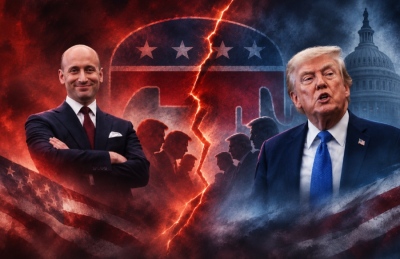
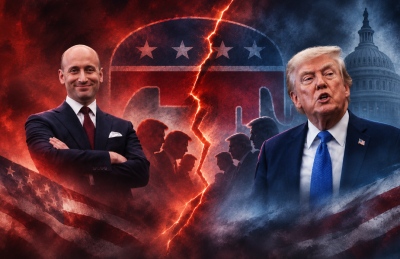
The foretold civil war and the battle for hegemony within the Republican Party
The development acquires even greater importance when connected to the warnings of Steve Bannon, one of the key ideological shapers of the MAGA movement. Bannon has warned that the Republican Party stands before an internal «civil war», as the electoral defeat reignites the clash over political identity and leadership of the American Right.
The confrontation is not merely about seeking accountability for the electoral failure.
It concerns who will determine the future of the party and, primarily, who will control the MAGA movement after Trump.
On one side stand proponents of the nationalist, populist, and anti-establishment orientation represented by Bannon.
On the other, more traditional Republicans, party apparatuses, and political and economic elites who seek a return to a more conventional conservative strategy.
Bannon views the electoral defeat as the launchpad for a wider battle over the political identity of the American Right.
The promotion of Miller can be interpreted as a response by Trump to precisely this dispute: rather than creating space for moderates and critics of the hardline approach, he chooses to reinforce his most loyal ideological core.
The choice of Miller is, consequently, a message to the interior of the Republican Party as well.
Trump does not intend to permit the erosion of his political leverage, nor allow his critics to exploit the electoral defeat to alter the trajectory of the movement.

Fear of prosecutions and the political survival of Trump
There is, however, a second dimension explaining the choice of conflict: the fear Trump harbors regarding the political and potentially legal ramifications of losing control of Congress.
Democrats have foreshadowed extensive investigations into the administration, the business dealings of the Trump family, financial transactions, and connections between the White House and private interests.
At the epicenter also lie immigration policy, actions of federal agencies, the handling of the Epstein files, and the potential abuse of state authority.
The return of Democrats to the parliamentary majority affords them the ability to leverage committee powers, request documents, issue subpoenas, and summon government officials to hearings.
Also on the political table sits the prospect of a new impeachment procedure, without this signifying that it has already been decided or that it will lead to the removal of the president.
The most telling element is that Trump himself has already demonstrated how anxious he is over this prospect. His directive to the Department of Justice to examine the actions of Democratic politicians, amidst threats of congressional probes against his administration, lays bare the atmosphere of escalating institutional confrontation.
Here lies a critical political contradiction: Trump denounces as political persecution the investigations announced by Democrats, while his own administration has employed the Department of Justice to investigate political adversaries.
For the American president, the loss of congressional protection could mean new disclosures, political weakening, and possible legal entanglements for himself and his associates.
Congressional investigations do not automatically equal criminal prosecutions, but they can create an exceptionally hostile political environment.
The anxiety of Trump is therefore not merely institutional. It is also personal. The prospect of facing a Congress that will scrutinize executive decisions, commercial ventures, and relationships within his inner circle represents a grave threat to his political survival.

The battle for the MAGA movement after Trump
Within this environment, the choice of Miller takes on a wider strategic significance as well. Trump attempts to ensure that MAGA does not transform into a movement that begins distancing itself from him, seeking a more electorally secure and moderate iteration.
The clash now centers on who will inherit his political and ideological legacy.
Steve Bannon insists on preserving the radical, nationalist, and anti-establishment character of the movement.
More traditional Republicans view the electoral defeat as a warning that the politics of endless conflict carries a cost and that the party requires reorientation.
In the background looms the succession of 2028.
JD Vance, Marco Rubio, and other figures of the Republican camp will have to position themselves before a critical dilemma: will there be MAGA without Trump, or will the movement remain politically dependent upon his personal leadership?
The promotion of Miller does not provide a definitive answer to this question. It indicates, however, that Trump does not plan to surrender control of his political faction easily.
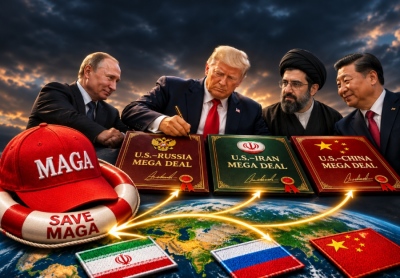
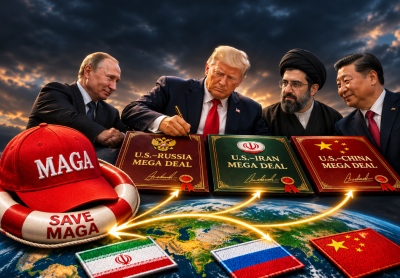
The choice of Miller, therefore, is not simply a preference for harsher governance. It marks the opening of a battle on two fronts: against the Democrats, who are preparing to scrutinize and investigate his administration, but also within the Republican ranks, where ownership and political hegemony over MAGA are decided.
The civil war described by Bannon does not concern only the next electoral contest. It concerns the future of the American Right, its relationship with institutions, and whether MAGA can survive as a political project beyond the man who forged it into a dominant political force.
www.bankingnews.gr





Σχόλια αναγνωστών